


Rossio / Baixa
Rossio / Baixa
A bit about the history of Rossio...
1 - A bit about the history of Rossio...
Once known as Valverde because it was a large plot of land where the Valverde and Arroios streams converged, today the Rossio area is one of the city's liveliest spots.
During Roman rule, this area was occupied by a hippodrome, where the famous Roman quadrigae were run. After the city was conquered by King Afonso Henriques, the land where the hippodrome had stood was used for fairs and markets.
From the 13th century onwards, Rossio became a noble area with the construction of hermitages, convents and palaces. In the 15th century, the Hospital de Todos os Santos was born here.
With the earthquake of 1755, Rossio saw many of its buildings fall to the ground and the hospital collapse almost entirely. From the rubble left by the earthquake, Rossio Square emerged as we know it today, having been named Praça D. Pedro IV in honor of the first emperor of independent Brazil.
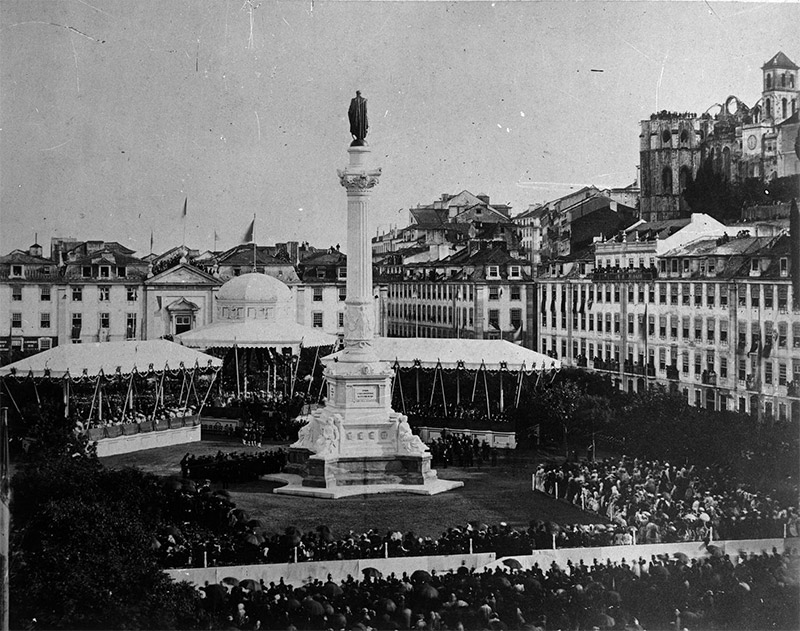
Inauguration of the statue of Dom Pedro IV © Arquivo Municipal de Lisboa
The reconstruction plan led by architect Carlos Mardel left us with a rectangular Rossio in a wooded setting with two monumental Baroque fountains.
In 1848, on the initiative of General Eusébio Pinheiro Furtado, the sidewalk was paved with Portuguese basalt and limestone mosaics in undulating patterns - a tribute to Lisbon's maritime past.
The square also houses Pombaline buildings, which are now occupied by souvenir stores, jewelry stores and cafés.
Located in the parish of Santa Maria Maior, in the heart of the Pombaline downtown, this is where Rua Augusta begins, the main and busiest street in downtown Lisbon, full of traditional restaurants, tourist stores and outdoor cafés. Following this street, we arrive at Terreiro do Paço, one of the most important and emblematic places in Lisbon.
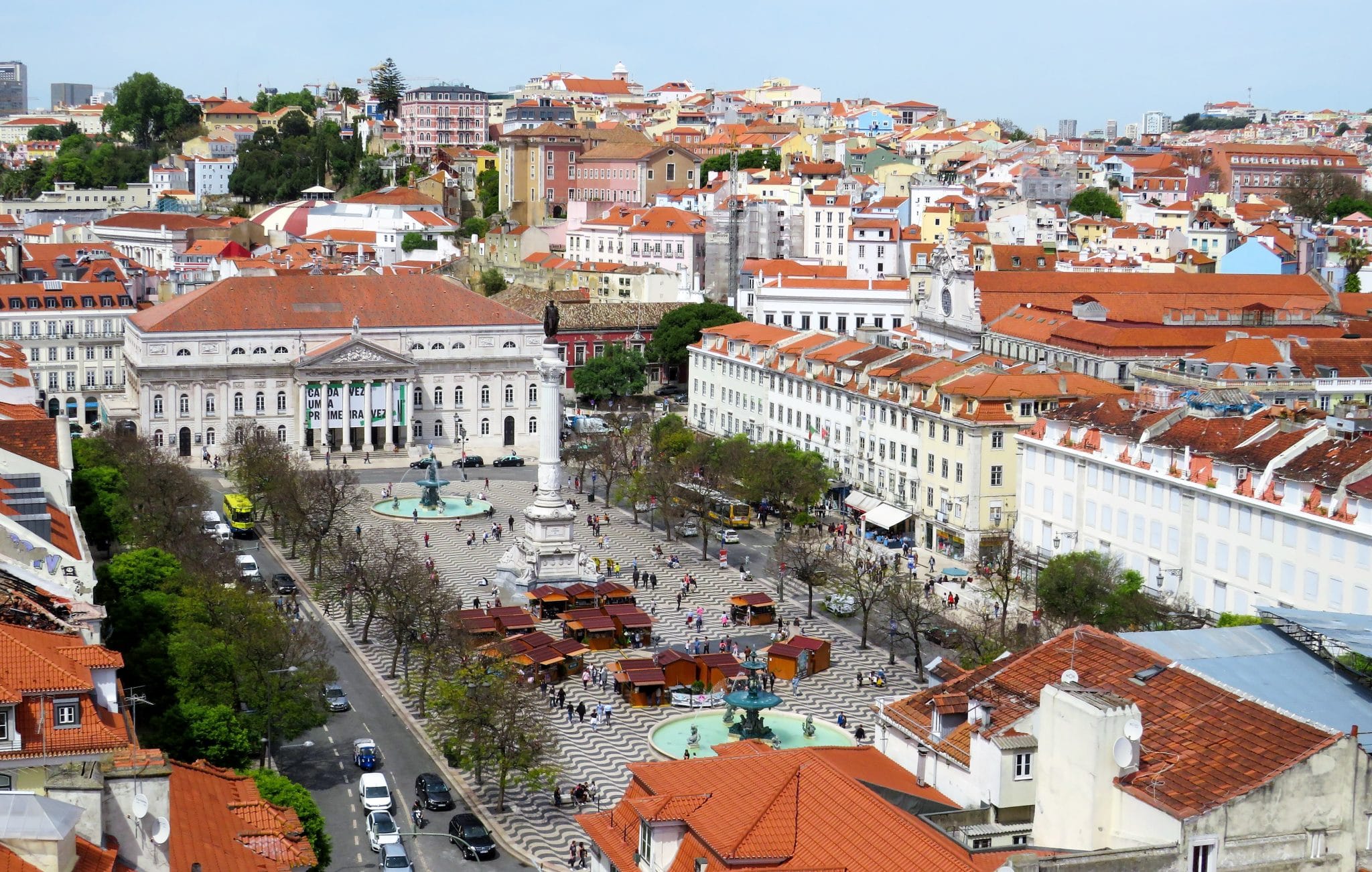
Rossio Square today © Photography by Mark-Lawson
1. Architecture in Rossio
In addition to the two baroque fountains, in the D. Pedro IV square we also find a neoclassical theater, an arch in Pombaline architecture from the late 18th century and an Art Deco café.
2. The parish of Santa Maria Maior in numbers
|
|
|
|
|
|
|
|
|
|
|
|
|
|
|
|
|
|
|
|
|
|
|
|
|
|
|
|
|
|
|
|
* (Population aged 65 or over / Population under 15) * 100
** Price Report August 2025 Idealista
*** Price Report August 2025 Idealista
Architectural Examples in Rossio
3 - Why choose to live in Rossio / Baixa?
If you live in the Rossio / Baixa Pombalina area, you'll be living in the heart of Lisbon.
With its very distinctive houses, streets and shops, it can be said that this is one of Portugal's most commercial and traditional areas.
On Rua Augusta, the link between Rossio and Praça do Comércio (Terreiro do Paço), you'll find traditional stores, restaurants serving typical Portuguese cuisine, outdoor cafés and luxury hotels and hostels. It is said that this is the street where everything happens, and it is common to find street performers here.
With its privileged location, you can easily get to other parts of the city. In addition to the streetcars that pass through here, the area has two metro stations, one in Rossio and the other in Terreiro do Paço.
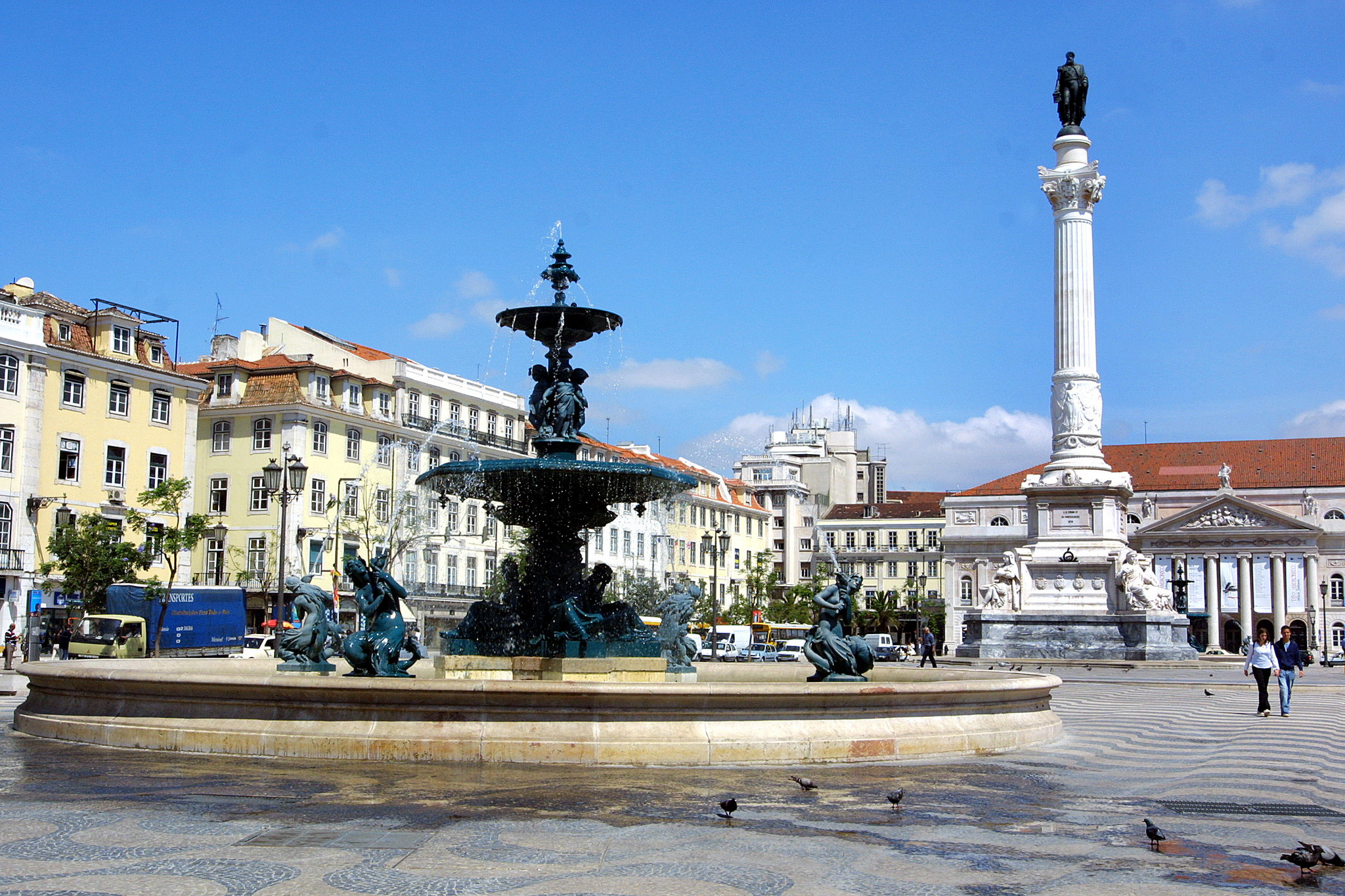
Fountain in Rossio and D. Pedro IV Statue © Visão
What to see and do in Rossio / Baixa?
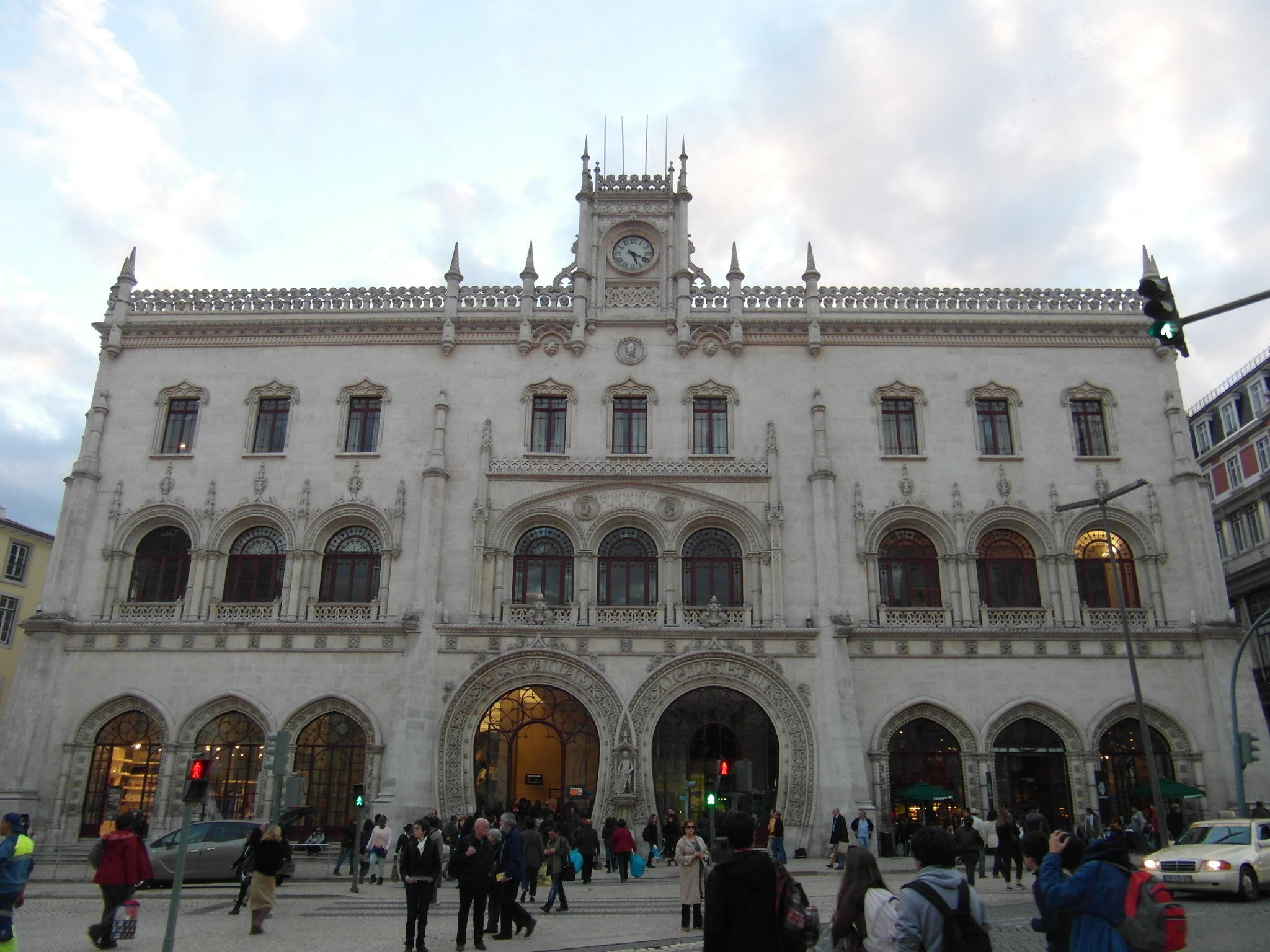
The Rossio train station is not only the most beautiful in Lisbon, but also one of the most beautiful in the world.
Classified as a building of public interest, Rossio Station has one of the most beautiful porticoes ever seen!
On its main façade, the windows and doors decorated with Manueline arches and the magnificent clock that crowns the building are other elements that stand out.
The station connects downtown Lisbon with the Sintra area.
Rossio Railway Station
Rossio Railway Station
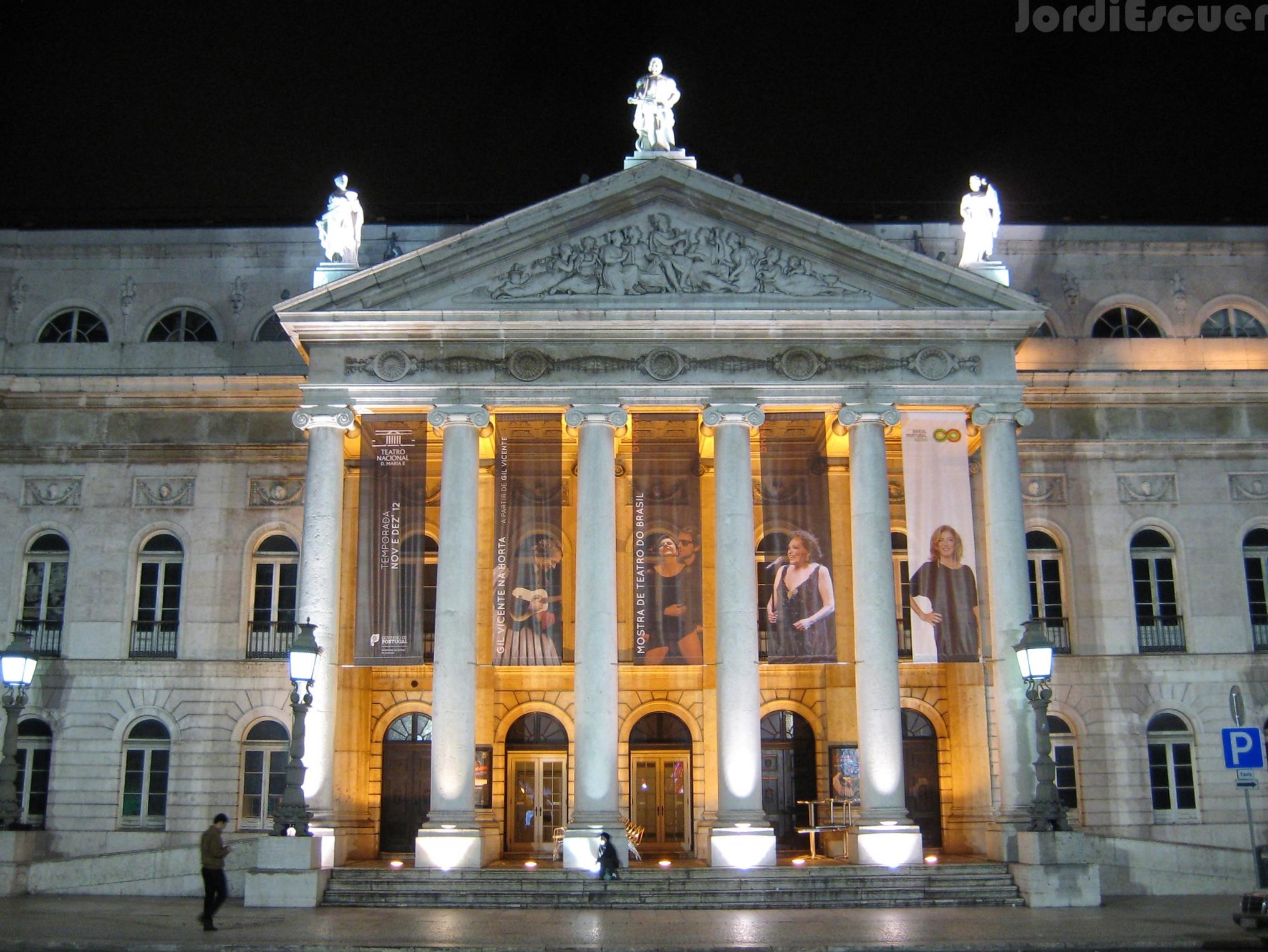
Inaugurated in 1846 and named after D. Pedro's daughter, the D. Maria II National Theatre is Lisbon's most important theater.
Here you can watch the best national and international plays, with the chance to explore the "other side of the stage" - dressing rooms, costume workshops, props and much more!
The building also houses a bookshop specializing in theater and other performing arts.
D. Maria II National Theatre
D. Maria II National Theatre

Rua Augusta is one of Lisbon's most famous streets. As you walk along it, you'll find many traditional stores, cafés and restaurants serving Portuguese cuisine, most of which have terraces.
This is the street where everything happens, and it's common to come across street artists, craftspeople and street vendors.
At one end of the street is the triumphal arch, which leads down to the Tagus. Climb to the top of this unique monument and enjoy one of the most breathtaking views of Lisbon.
Price normal ticket Viewpoint 3€
Opening hours Viewpoint
From 10 a.m. to 7 p.m.
Rua Augusta
Rua Augusta
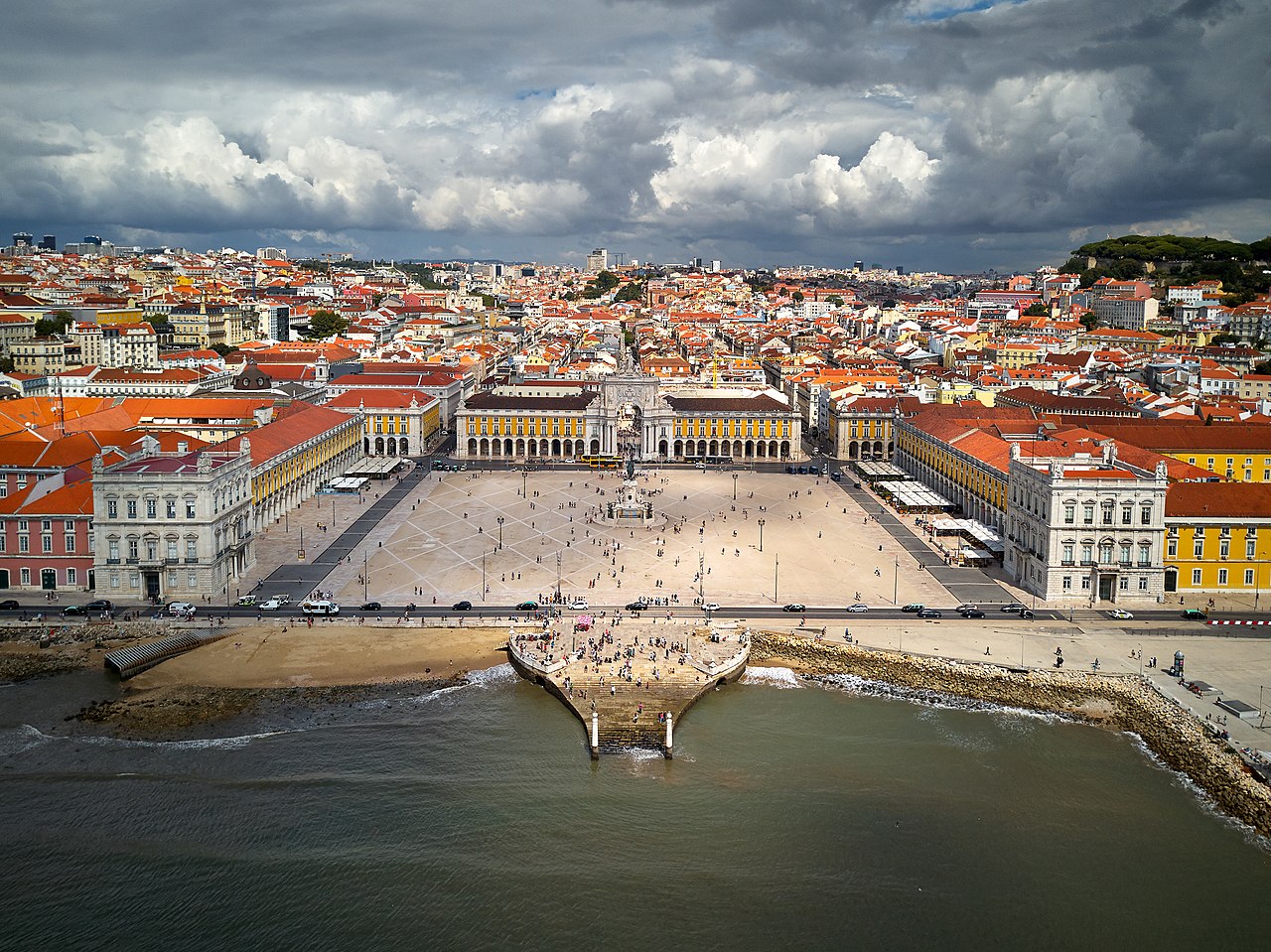
Praça do Comércio (also called Terreiro do Paço) is one of the largest and most beautiful squares in Europe.
Opening south onto the Tagus estuary, this square is one of the city's nerve centers.
The yellow buildings that surround it, which once served as a palace for kings, now house Portuguese ministries, government departments, cultural activity centers, hotels, restaurants and cafés - including Lisbon's oldest café, Martinho da Arcada.
Open-air shows and cultural events are often held here.
In the center of Praça do Comércio is the equestrian statue of King José I.
Praça do Comércio
Praça do Comércio
Where to eat and drink:
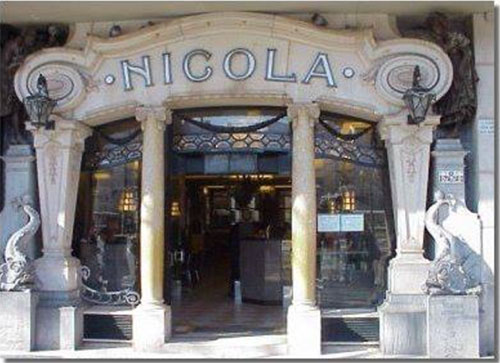
Café Nicola was one of Lisbon's first cafés and a meeting place for writers, artists and politicians.
Considered to be the second home of the poet Bocage - still present in sculpture and the main character of the canvases that decorate the walls - this café is a must-see in downtown Lisbon.
Its Art Deco façade is one of the "ex-libris" of Praça D. Pedro IV.
Currently a café and restaurant, Café Nicola serves traditional Portuguese cuisine. On Thursdays, at dinner time, jazz and classical music concerts are held here.
Average price: 30€
Opening hours: From 7 a.m. to midnight
Café Nicola
Café Nicola
©Café Nicola
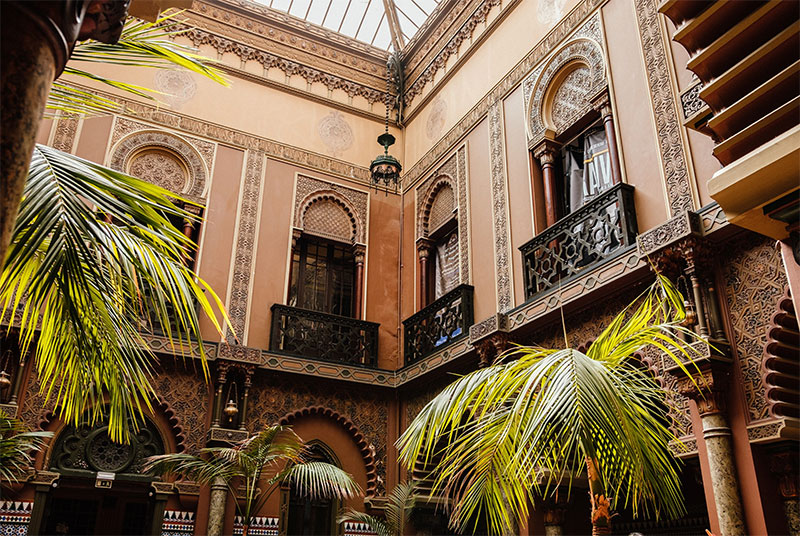
Housed in a 19th century palace, Casa do Alentejo is a multi-purpose cultural space whose aim is to preserve Alentejo culture.
As well as hosting exhibitions, competitions and conferences, there are cultural afternoons on Saturdays and social dances on Sundays.
Casa do Alentejo also has a library, a restaurant and a tavern. The Taberna da Casa do Alentejo is a relaxed space in an open courtyard with a terrace - ideal for sampling some good Alentejo snacks!
With its neo-Arabic style architecture, Casa do Alentejo's beauty is one of the main reasons why you shouldn't miss it!
Casa do Alentejo
Casa do Alentejo
©Casa do Alentejo
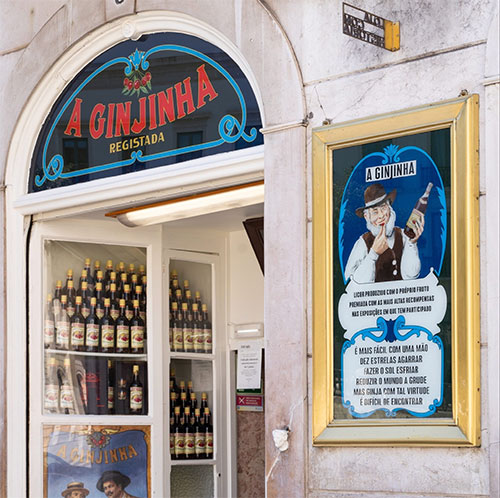
Did you know that Rossio's ginjinha is a gold medal winner?
It's true, the sour cherry liqueur served at Ginjinha Espinheira has won several awards and has already secured three gold medals!
In this century-old house (1840), service is done at the counter and in conversation with the charismatic staff, who won't hesitate to ask you the famous question "With them or without them?".
They say that "going to Rossio and not drinking a ginjinha is almost like going to Rome and not seeing the Pope".
Stop by and try one of Portugal's most traditional drinks.
Opening hours: From 9 a.m. to 10 p.m.
A Ginjinha
A Ginjinha
©A Ginginha
Buyer testimonials
Buyer testimonials
“We bought a flat through De Brito Properties several months ago and they have always helped us with the work, the contracts, the procedures (quickly and reliably). They have become our point of reference in Portugal and help us with all our questions. We congratulate ourselves every day for having gone through them for our purchase in Lisbon.”
Isabelle Sebah
“We bought a flat several months ago from De Brito and we were always helped with the works, the electricity, the various stages. It really is the ideal agency for a long-term property transaction!”
Florence Crisanto
"Very good experience. Very professional and reliable agency, and even more so because they helped us every step of the way, a great advantage, especially when you don't speak the language. Thanks to the whole team for their availability and friendliness."
Véronica L.
“My husband and I had great help buying a house in Azeitão. Titti Curtaz was attentive, professional, friendly and truly listened to our needs and concerns as we tried to find the right house for us. She was generous and patient. Our Portuguese is very basic and she graciously helped us translate the information between the seller and us. I highly recommend her and De Brito Properties”
Christina S.
"Professional, serious and attentive team. Very good service and good products. Ideal accompaniment!"
Jean Louis D.
"Quality service that listens to the customer. Thank you very much for helping us with our purchase and installation in Lisbon."
Bernardette Fernandes
See our selection of properties in Rossio/Baixa
See our selection of properties in Rossio/Baixa
We are your "Property Finder"
We are your "Property Finder"
Didn't find the property you're looking for on our website? Leave us your criteria and we will search the market and prepare a selection that suits your request.

