


Graça
Graça
A little about the history of Graça...
1 - A bit about the history of the Graça neighborhood...
The origins of the Graça neighborhood date back to the 13th century, when the Augustinian convent was founded here. In 1305, it became the Convent of Nossa Senhora da Graça, and the Graça neighborhood was born.
Once located outside the walls of Lisbon (Moorish enclosure), it wasn't until 1371, with the construction of the Fernandine enclosure, that it became part of the city's domains. Even so, for many years it remained an essentially agricultural area, sparsely inhabited.
In the 16th century, with the nobility settling in this part of the city, palaces and social spaces began to appear here, such as the Teatro da Graça (1767). In the 18th century, various religious buildings were added, such as the Convent of Graça, the Chapel of Nossa Senhora do Monte, the Convent of the Mónicas, the Chapel of Nossa Senhora da Glória and the Chapel of Saint Verónica.
1 - A bit about the history of the Graça neighborhood...
The origins of the Graça neighborhood date back to the 13th century, when the Augustinian convent was founded here. In 1305, it became the Convent of Nossa Senhora da Graça, and the Graça neighborhood was born.
Once located outside the walls of Lisbon (Moorish enclosure), it wasn't until 1371, with the construction of the Fernandine enclosure, that it became part of the city's domains. Even so, for many years it remained an essentially agricultural area, sparsely inhabited.
In the 16th century, with the nobility settling in this part of the city, palaces and social spaces began to appear here, such as the Teatro da Graça (1767). In the 18th century, various religious buildings were added, such as the Convent of Graça, the Chapel of Nossa Senhora do Monte, the Convent of the Mónicas, the Chapel of Nossa Senhora da Glória and the Chapel of Saint Verónica.
1 - A bit about the history of the Graça neighborhood...
The origins of the Graça neighborhood date back to the 13th century, when the Augustinian convent was founded here. In 1305, it became the Convent of Nossa Senhora da Graça, and the Graça neighborhood was born.
Once located outside the walls of Lisbon (Moorish enclosure), it wasn't until 1371, with the construction of the Fernandine enclosure, that it became part of the city's domains. Even so, for many years it remained an essentially agricultural area, sparsely inhabited.
In the 16th century, with the nobility settling in this part of the city, palaces and social spaces began to appear here, such as the Teatro da Graça (1767). In the 18th century, various religious buildings were added, such as the Convent of Graça, the Chapel of Nossa Senhora do Monte, the Convent of the Mónicas, the Chapel of Nossa Senhora da Glória and the Chapel of Saint Verónica.
1 - A bit about the history of the Graça neighborhood...
The origins of the Graça neighborhood date back to the 13th century, when the Augustinian convent was founded here. In 1305, it became the Convent of Nossa Senhora da Graça, and the Graça neighborhood was born.
Once located outside the walls of Lisbon (Moorish enclosure), it wasn't until 1371, with the construction of the Fernandine enclosure, that it became part of the city's domains. Even so, for many years it remained an essentially agricultural area, sparsely inhabited.
In the 16th century, with the nobility settling in this part of the city, palaces and social spaces began to appear here, such as the Teatro da Graça (1767). In the 18th century, various religious buildings were added, such as the Convent of Graça, the Chapel of Nossa Senhora do Monte, the Convent of the Mónicas, the Chapel of Nossa Senhora da Glória and the Chapel of Saint Verónica.
1 - A bit about the history of the Graça neighborhood...
The origins of the Graça neighborhood date back to the 13th century, when the Augustinian convent was founded here. In 1305, it became the Convent of Nossa Senhora da Graça, and the Graça neighborhood was born.
Once located outside the walls of Lisbon (Moorish enclosure), it wasn't until 1371, with the construction of the Fernandine enclosure, that it became part of the city's domains. Even so, for many years it remained an essentially agricultural area, sparsely inhabited.
In the 16th century, with the nobility settling in this part of the city, palaces and social spaces began to appear here, such as the Teatro da Graça (1767). In the 18th century, various religious buildings were added, such as the Convent of Graça, the Chapel of Nossa Senhora do Monte, the Convent of the Mónicas, the Chapel of Nossa Senhora da Glória and the Chapel of Saint Verónica.
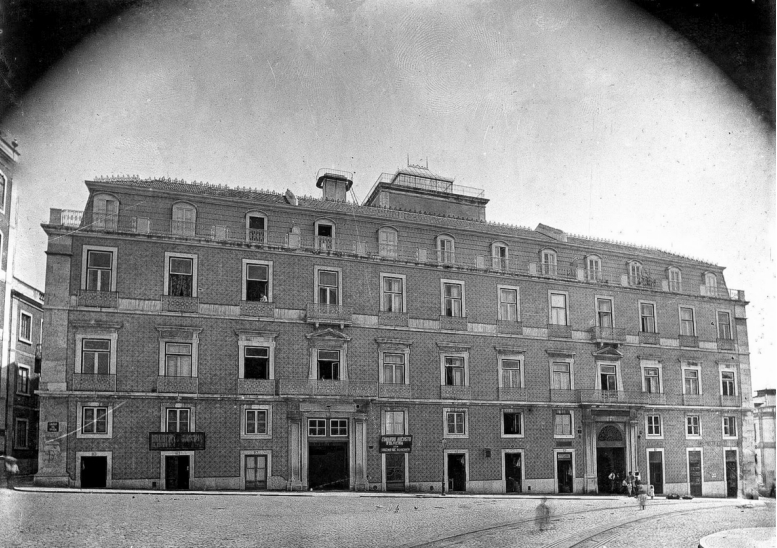
Vila Sousa (entre 1902 e 1908) © Machado & Souza, in A.M.L
The neighborhood begins to take on its current form and Largo da Graça, Calçada da Graça and Rua da Graça are born.
The 1755 earthquake and the subsequent reconstruction of the city marked a turning point in the neighborhood's history. It became home to a large number of workers who were looking for cheap land close to the city center.
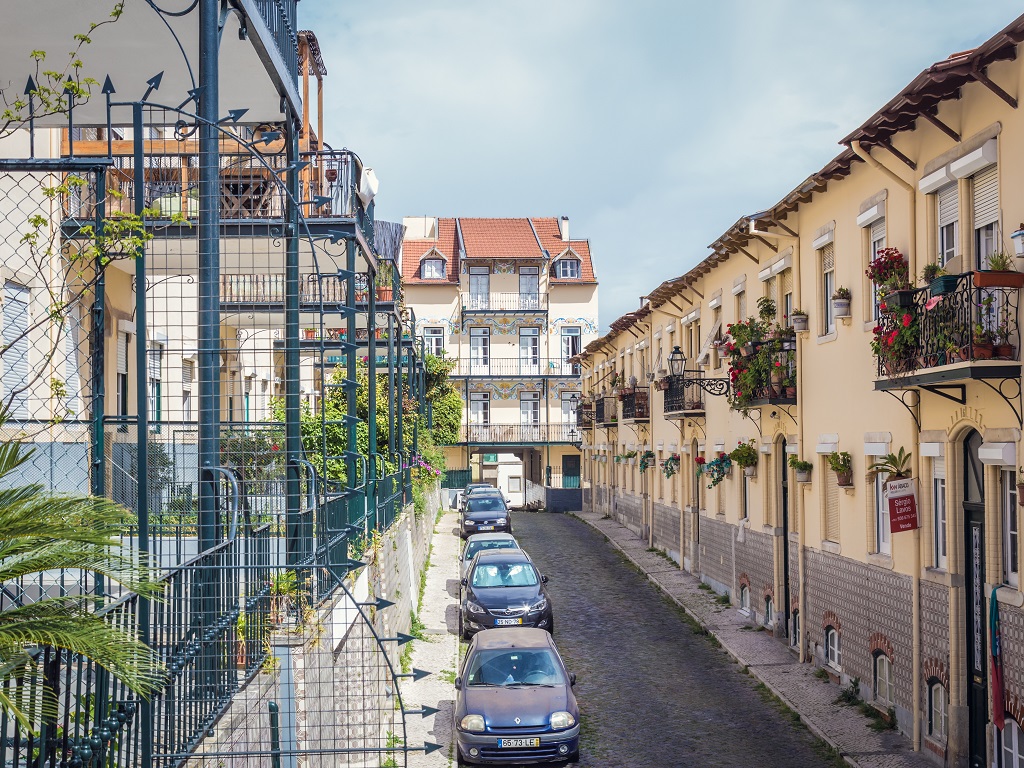
In the 20th century, with the construction of the Santa Apolónia railroad, Graça became home to several workers's villages, such as Vila Berta, Vila Souza and Estrela d'Ouro - which can still be visited.
Today, Graça is a very rich and diverse neighborhood, where the spirit of old Lisbon is preserved.
The neighborhood begins to take on its current form and Largo da Graça, Calçada da Graça and Rua da Graça are born.
The 1755 earthquake and the subsequent reconstruction of the city marked a turning point in the neighborhood's history. It became home to a large number of workers who were looking for cheap land close to the city center.
In the 20th century, with the construction of the Santa Apolónia railroad, Graça became home to several workers's villages, such as Vila Berta, Vila Souza and Estrela d'Ouro - which can still be visited.
Today, Graça is a very rich and diverse neighborhood, where the spirit of old Lisbon is preserved.
The neighborhood begins to take on its current form and Largo da Graça, Calçada da Graça and Rua da Graça are born.
The 1755 earthquake and the subsequent reconstruction of the city marked a turning point in the neighborhood's history. It became home to a large number of workers who were looking for cheap land close to the city center.
In the 20th century, with the construction of the Santa Apolónia railroad, Graça became home to several workers's villages, such as Vila Berta, Vila Souza and Estrela d'Ouro - which can still be visited.
Today, Graça is a very rich and diverse neighborhood, where the spirit of old Lisbon is preserved.
Pastry Shop “A Tentadora” © Universidade Nova de Lisboa
Paragraph
Alfama thus began to lose its importance and, although it wasn't affected by the earthquake, it was left behind.
by the earthquake, it was left abandoned by the central government until the 20th century - being identified
being identified as a dangerous part of the city.
Despite its decadence in the 19th century Alfama saw the emergence of a musical style that is now considered to be an intangible UNESCO intangible heritage - Fado! Born in the streets, bars and prostitution centres of
Alfama, Fado began to be heard at court and gained another kind of prominence.
With the emergence of the fado singer Amália Rodrigues, fado became internationally recognised.
recognised internationally.
Today, Alfama is one of the best known and most visited neighbourhoods in the city. Here
you can feel the neighbourhood life, you can feel the fado, you can feel the essence of Lisbon!
Paragraph
Mosteiro dos Jerónimos © Wikimedia – CC BY-SA 4.0 – Ingo Mehling (Imagem Original)
Vila Berta © Universidade Nova de Lisboa
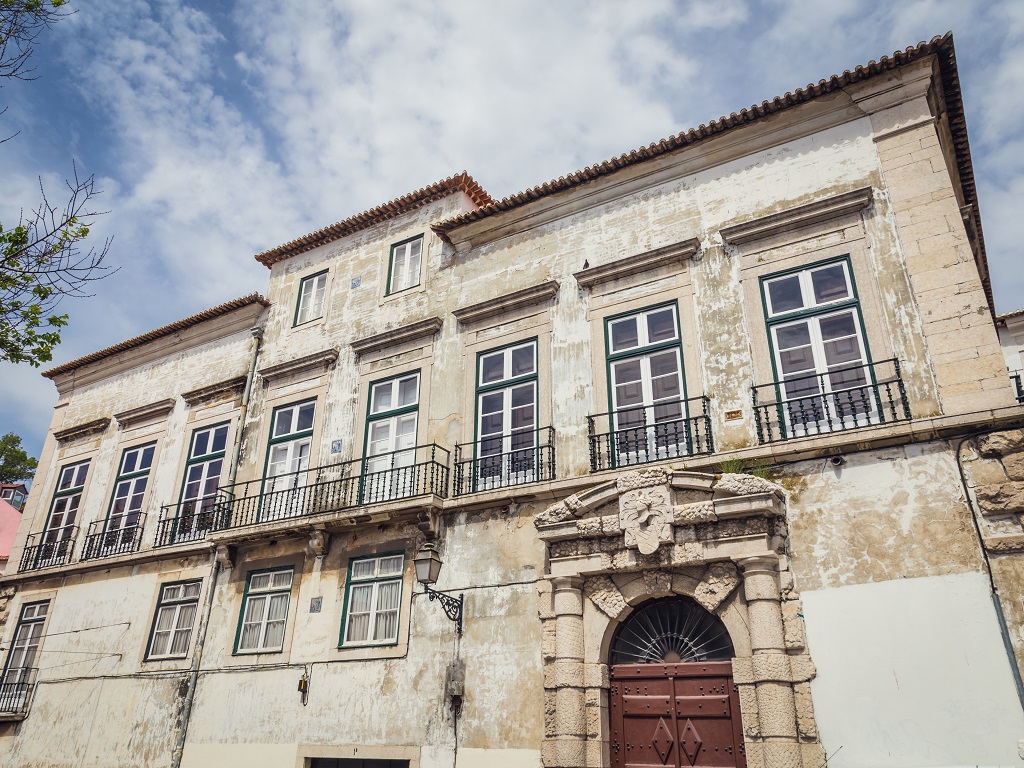
Palace of the Counts of Figueira © Universidade Nova de Lisboa
a. Architecture in the Graça district
From Baroque convents to imposing 17th century palaces, the Graça district retains the architectural and artistic styles that reflect its history.
As you stroll through its streets, you'll also find some of the most emblematic Art Nouveau buildings, such as the former Cine Royal, which is now home to a supermarket.
2- The parish of São Vicente in numbers
|
São Vicente |
|
|
|
|
|
|
|
|
|
|
|
|
|
|
|
|
|
|
|
|
|
|
|
|
|
|
|
|
|
|
* (Population aged 65 or over / Population under 15) * 100
** Price Report August 2025 Idealista
*** Price Report August 2025 Idealista
a. Architecture in the Graça district
From Baroque convents to imposing 17th century palaces, the Graça district retains the architectural and artistic styles that reflect its history.
As you stroll through its streets, you'll also find some of the most emblematic Art Nouveau buildings, such as the former Cine Royal, which is now home to a supermarket.
2- The parish of São Vicente in numbers
|
São Vicente |
|
|
|
|
|
|
|
|
|
|
|
|
|
|
|
|
|
|
|
|
|
|
|
|
|
|
|
|
|
|
* (Population aged 65 or over / Population under 15) * 100
** Price Report December 2024 Idealist
*** Price Report December 2024 Idealist
a. Architecture in the Graça district
From Baroque convents to imposing 17th century palaces, the Graça district retains the architectural and artistic styles that reflect its history.
As you stroll through its streets, you'll also find some of the most emblematic Art Nouveau buildings, such as the former Cine Royal, which is now home to a supermarket.
2- The parish of São Vicente in numbers
|
São Vicente |
|
|
|
|
|
|
|
|
|
|
|
|
|
|
|
|
|
|
|
|
|
|
|
|
|
|
|
|
|
|
* (Population aged 65 or over / Population under 15) * 100
** Price Report August 2025 Idealista
*** Price Report August 2025 Idealista
Pastry Shop “A Tentadora” © Universidade Nova de Lisboa
Paragraph
Alfama thus began to lose its importance and, although it wasn't affected by the earthquake, it was left behind.
by the earthquake, it was left abandoned by the central government until the 20th century - being identified
being identified as a dangerous part of the city.
Despite its decadence in the 19th century Alfama saw the emergence of a musical style that is now considered to be an intangible UNESCO intangible heritage - Fado! Born in the streets, bars and prostitution centres of
Alfama, Fado began to be heard at court and gained another kind of prominence.
With the emergence of the fado singer Amália Rodrigues, fado became internationally recognised.
recognised internationally.
Today, Alfama is one of the best known and most visited neighbourhoods in the city. Here
you can feel the neighbourhood life, you can feel the fado, you can feel the essence of Lisbon!
Paragraph
Mosteiro dos Jerónimos © Wikimedia – CC BY-SA 4.0 – Ingo Mehling (Imagem Original)
3 - Why choose to live in Graça?
Graça is one of the most beautiful and oldest neighborhoods in the city, where you can still feel what it´s like to be from Lisbon.
Life here is calm and comforting, and like its neighbor Alfama (800m away), this is a place where everyone knows each other and says hello.
In this lively neighborhood you´ll find a wide variety of traditional stores, cafés, pastry stores, bakeries, fruit stores and restaurants serving Portuguese cuisine.
Located on the highest of the seven hills, the Colina de Santo André, the neighborhood offers spectacular panoramic views over the city, the Tagus and the iconic Castelo de São Jorge. Among the best-known viewpoints are the Miradouro da Senhora do Monte and the Miradouro da Graça, which has a green space of almost 2 hectares.
3 - Why choose to live in Graça?
Graça is one of the most beautiful and oldest neighborhoods in the city, where you can still feel what it's like to be from Lisbon.
Life here is calm and comforting, and like its neighbor Alfama (800m away), this is a place where everyone knows each other and says hello.
In this lively neighborhood you'll find a wide variety of traditional stores, cafés, pastry stores, bakeries, fruit stores and restaurants serving Portuguese cuisine.
Located on the highest of the seven hills, the Colina de Santo André, the neighborhood offers spectacular panoramic views over the city, the Tagus and the iconic Castelo de São Jorge. Among the best-known viewpoints are the Miradouro da Senhora do Monte and the Miradouro da Graça, which has a green space of almost 2 hectares.
3 - Why choose to live in Graça?
Graça is one of the most beautiful and oldest neighborhoods in the city, where you can still feel what it's like to be from Lisbon.
Life here is calm and comforting, and like its neighbor Alfama (800m away), this is a place where everyone knows each other and says hello.
In this lively neighborhood you'll find a wide variety of traditional stores, cafés, pastry stores, bakeries, fruit stores and restaurants serving Portuguese cuisine.
Located on the highest of the seven hills, the Colina de Santo André, the neighborhood offers spectacular panoramic views over the city, the Tagus and the iconic Castelo de São Jorge. Among the best-known viewpoints are the Miradouro da Senhora do Monte and the Miradouro da Graça, which has a green space of almost 2 hectares.
3 - Why choose to live in Graça?
Graça is one of the most beautiful and oldest neighborhoods in the city, where you can still feel what it's like to be from Lisbon.
Life here is calm and comforting, and like its neighbor Alfama (800m away), this is a place where everyone knows each other and says hello.
In this lively neighborhood you'll find a wide variety of traditional stores, cafés, pastry stores, bakeries, fruit stores and restaurants serving Portuguese cuisine.
Located on the highest of the seven hills, the Colina de Santo André, the neighborhood offers spectacular panoramic views over the city, the Tagus and the iconic Castelo de São Jorge. Among the best-known viewpoints are the Miradouro da Senhora do Monte and the Miradouro da Graça, which has a green space of almost 2 hectares.
3 - Why choose to live in Graça?
Graça is one of the most beautiful and oldest neighborhoods in the city, where you can still feel what it's like to be from Lisbon.
Life here is calm and comforting, and like its neighbor Alfama (800m away), this is a place where everyone knows each other and says hello.
In this lively neighborhood you'll find a wide variety of traditional stores, cafés, pastry stores, bakeries, fruit stores and restaurants serving Portuguese cuisine.
Located on the highest of the seven hills, the Colina de Santo André, the neighborhood offers spectacular panoramic views over the city, the Tagus and the iconic Castelo de São Jorge. Among the best-known viewpoints are the Miradouro da Senhora do Monte and the Miradouro da Graça, which has a green space of almost 2 hectares.
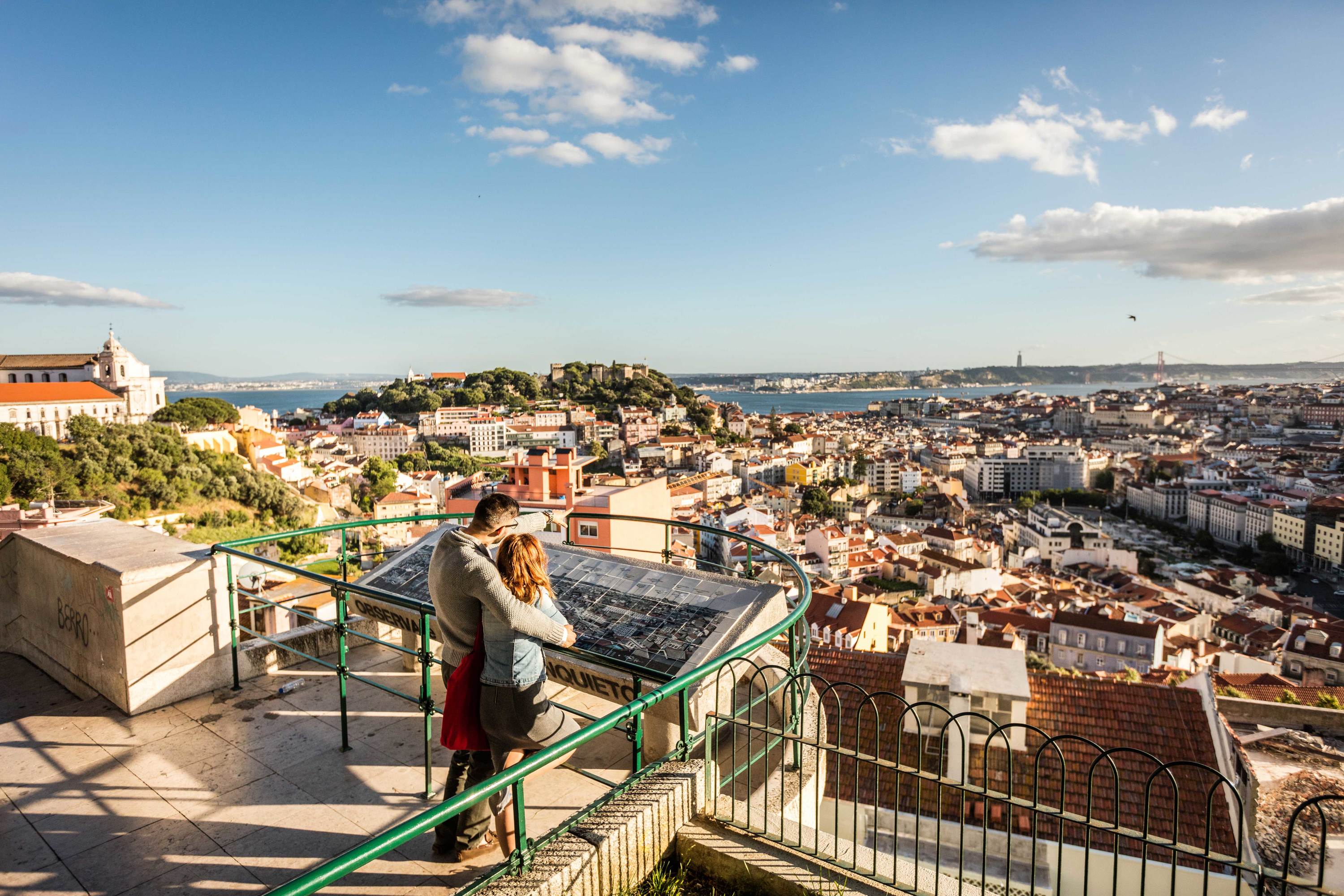
© Time Out Lisboa
What to see and do in Graça?
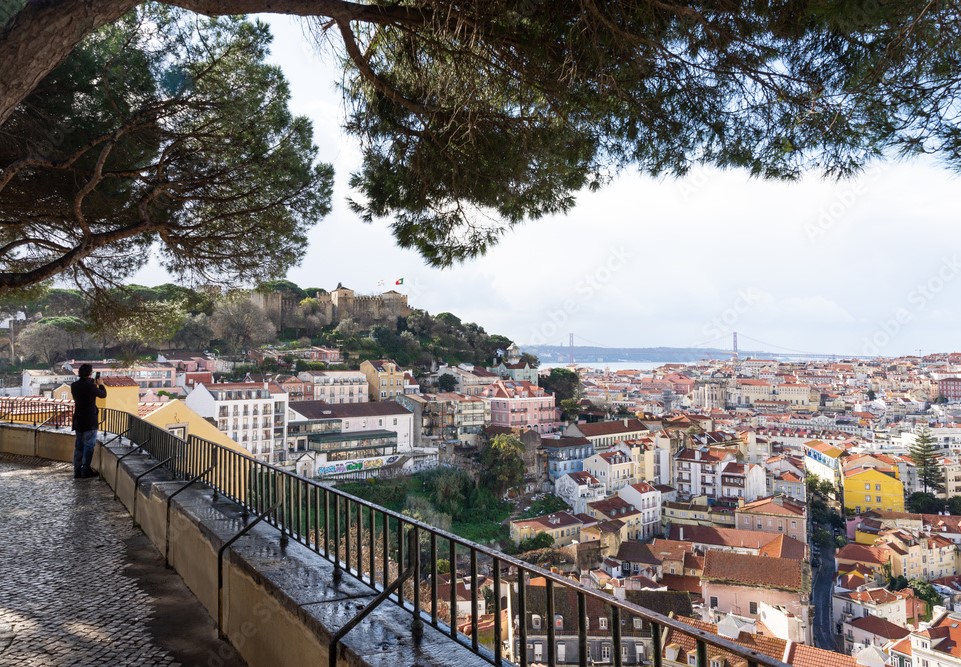
Located in the square of the same name, the Miradouro da Graça is one of the most popular places to contemplate the beauty of the city, with breathtaking views over Alfama; São Jorge Castle; the bridge; the Tagus and the Serra da Arrábida. Here, in addition to the scenery, you can enjoy the tranquillity of the place on a pleasant terrace, surrounded by the shade of stone pines. You can also spend time reading, soaking up the sun or even have a picnic in the surrounding garden, Jardim da Cerca da Graça - which covers almost 2 hectares. Fun fact: Did you know that the official name of this viewpoint is Miradouro Sophia de Mello Breyner Andresen? That´s right, it was here that the famous Portuguese poet spent many of her days admiring Lisbon.
Located in the square of the same name, the Miradouro da Graça is one of the most popular places to contemplate the beauty of the city, with breathtaking views over Alfama, São Jorge Castle, the bridge, the Tagus and the Serra da Arrábida. Here, in addition to the scenery, you can enjoy the tranquillity of the place on a pleasant terrace, surrounded by the shade of stone pines. You can also spend time reading, soaking up the sun or even have a picnic in the surrounding garden, Jardim da Cerca da Graça - which covers almost 2 hectares. Fun fact: Did you know that the official name of this viewpoint is Miradouro Sophia de Mello Breyner Andresen? That's right, it was here that the famous Portuguese poet spent many of her days admiring Lisbon.
Graça Viewpoint
Graça Viewpoint
©Câmara Municipal de Lisboa - Jardim da Parada
@visitlisboa
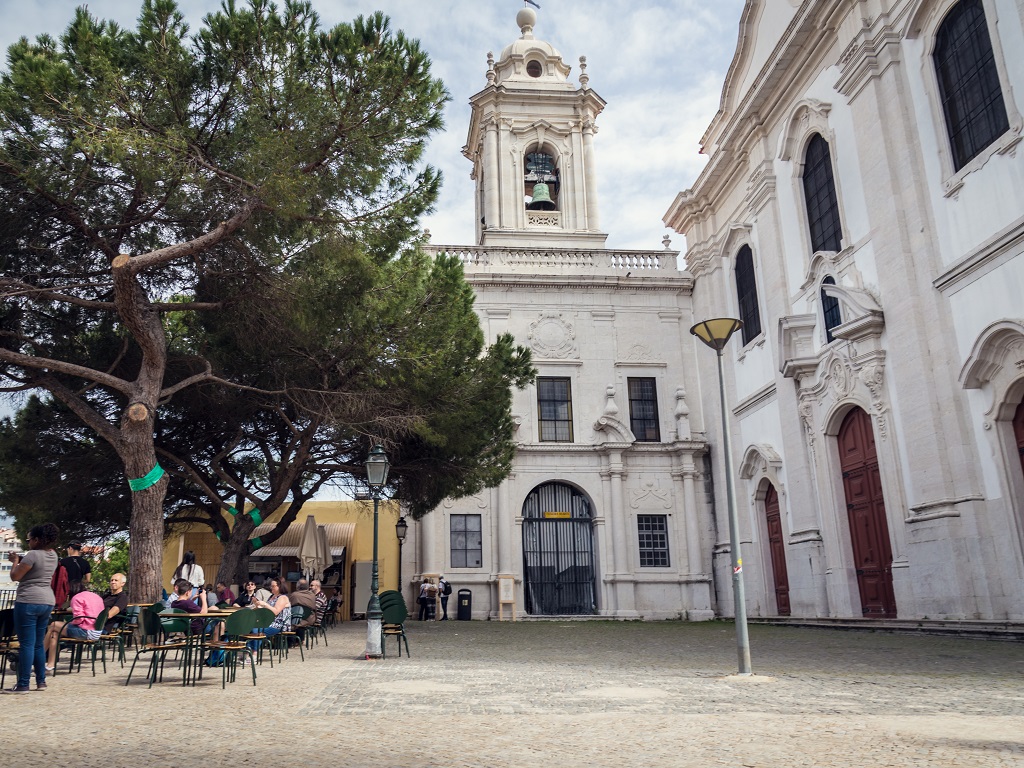
Founded in the 13th century by the Religious Order of Saint Augustine, the Convent and Church of Graça have undergone several changes over time and are now classified as a National Monument. With some renovations in the 15th century and a restoration after the 1755 earthquake, the buildings display a variety of architectural and artistic styles that reflect their history. These include the 16th, 17th and 18th century tiles; the gilded woodwork of the rococo style altars; the 18th century sculptures in the intermediate chapels and the baroque decoration of the sacristy.
Opening hours
Tuesday to Friday: 9 a.m. - 6 p.m.
Saturday: 9h30 - 12h30 / 14h30 - 18h00
Sunday: 9:30 a.m. - 12:30 p.m. / 5:00 p.m. - 8:00 p.m.
Founded in the 13th century by the Religious Order of Saint Augustine, the Convent and Church of Graça have undergone several changes over time and are now classified as a National Monument. With some renovations in the 15th century and a restoration after the 1755 earthquake, the buildings display a variety of architectural and artistic styles that reflect their history. These include the 16th, 17th and 18th century tiles; the gilded woodwork of the rococo style altars; the 18th century sculptures in the intermediate chapels and the baroque decoration of the sacristy.
Opening hours
Tuesday to Friday: 9 a.m. - 6 p.m.
Saturday: 9h30 - 12h30 / 14h30 - 18h00
Sunday: 9:30 a.m. - 12:30 p.m. / 5:00 p.m. - 8:00 p.m.
Founded in the 13th century by the Religious Order of Saint Augustine, the Convent and Church of Graça have undergone several changes over time and are now classified as a National Monument. With some renovations in the 15th century and a restoration after the 1755 earthquake, the buildings display a variety of architectural and artistic styles that reflect their history. These include the 16th, 17th and 18th century tiles; the gilded woodwork of the rococo style altars; the 18th century sculptures in the intermediate chapels and the baroque decoration of the sacristy.
Opening hours
Tuesday to Friday: 9 a.m. - 6 p.m.
Saturday: 9h30 - 12h30 / 14h30 - 18h00
Sunday: 9:30 a.m. - 12:30 p.m. / 5:00 p.m. - 8:00 p.m.
Convent and Church of Graça
Convent and Church of Graça
@visitlisboa
@capilopes
© Universidade Nova de Lisboa
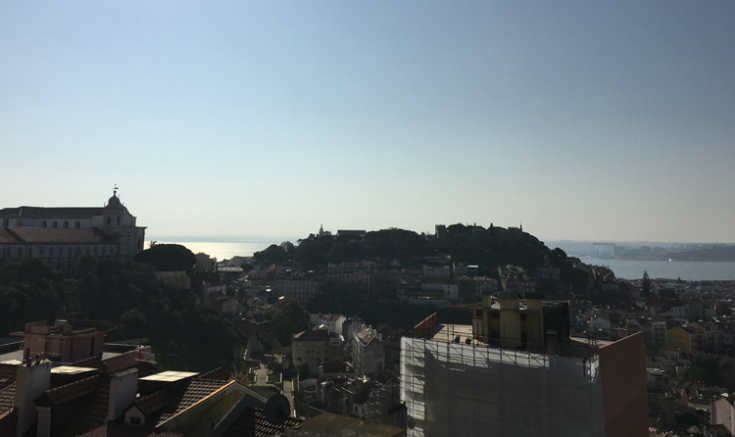
The Senhora do Monte viewpoint is one of the highest in the city of Lisbon, standing at approximately 90 meters above sea level. To get there you´ll have to walk up a hill, but the effort will be rewarded with a magnificent view over the Tagus, São Jorge Castle, Baixa Pombalina, Bairro Alto, the Monsanto mountain range and Avenida Almirante Reis. Here you will find a tile painting of the map of Lisbon, which identifies the various monuments that can be seen from the viewpoint. Opposite the viewpoint is the hermitage of the same name, founded in 1147. Curiosity. Did you know that inside the chapel there is a chair that once belonged to a saint? It´s true, legend has it that pregnant women who sit here will give birth without complications.
The Senhora do Monte viewpoint is one of the highest in the city of Lisbon, standing at approximately 90 meters above sea level. To get there you'll have to walk up a hill, but the effort will be rewarded with a magnificent view over the Tagus, São Jorge Castle, Baixa Pombalina, Bairro Alto, the Monsanto mountain range and Avenida Almirante Reis. Here you will find a tile painting of the map of Lisbon, which identifies the various monuments that can be seen from the viewpoint. Opposite the viewpoint is the hermitage of the same name, founded in 1147. Fun Fact: Did you know that inside the chapel there is a chair that once belonged to a saint? It's true, legend has it that pregnant women who sit here will give birth without complications.
Senhora do Monte Viewpoint
Senhora do Monte Viewpoint
@casafernandopessoa
Amália Rodrigues Garden © Dominique Cappronnier
©visitlisboa
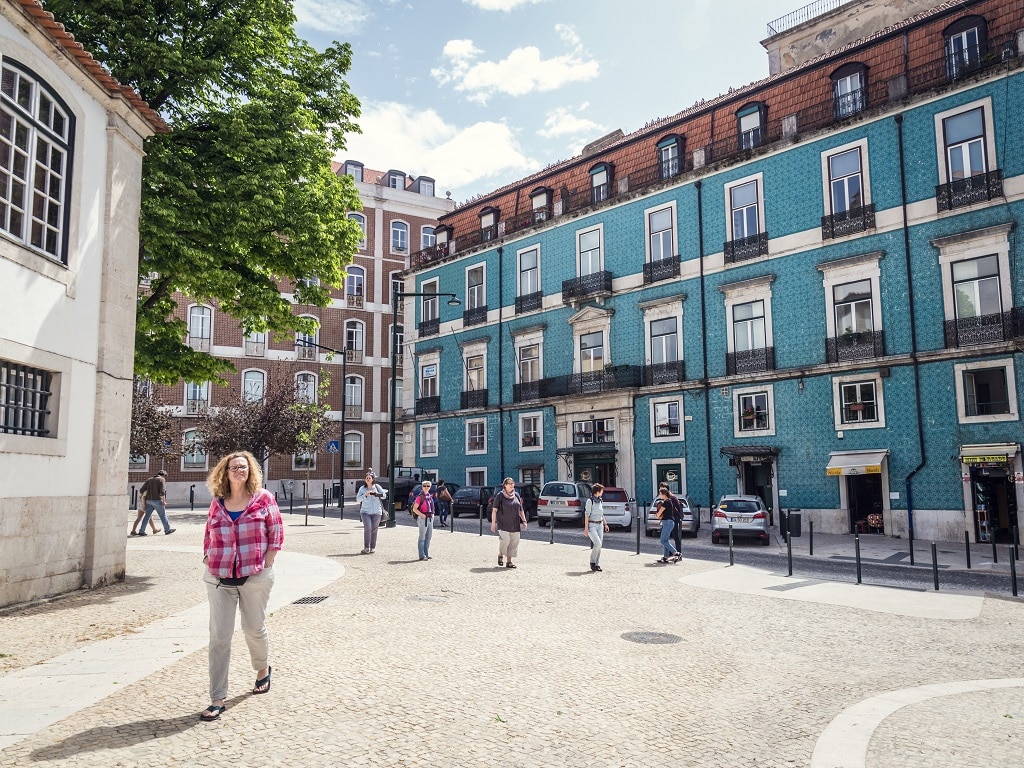
The Graça neighborhood isn't just made up of convents and palaces; there are many workers' villages to discover in the area. These villages, which sprang up with the industrial boom of the 19th century, retain the neighborhood charm and beauty of yesteryear, although their use is now different. Among the best known are Vila Berta (1902), known for its cast iron balconies; Vila Sousa (1890), decorated with beautiful blue tiles and Estrela D'Ouro (1907), which stands out for its grand polychrome tile panels. An unmissable walk!
The Graça neighborhood isn't just made up of convents and palaces; there are many workers' villages to discover in the area. These villages, which sprang up with the industrial boom of the 19th century, retain the neighborhood charm and beauty of yesteryear, although their use is now different. Among the best known are Vila Berta (1902), known for its cast iron balconies; Vila Sousa (1890), decorated with beautiful blue tiles and Estrela D'Ouro (1907), which stands out for its grand polychrome tile panels. An unmissable walk!
The Graça neighborhood isn't just made up of convents and palaces; there are many workers' villages to discover in the area. These villages, which sprang up with the industrial boom of the 19th century, retain the neighborhood charm and beauty of yesteryear, although their use is now different. Among the best known are Vila Berta (1902), known for its cast iron balconies; Vila Sousa (1890), decorated with beautiful blue tiles and Estrela D'Ouro (1907), which stands out for its grand polychrome tile panels. An unmissable walk!
The Graça neighborhood isn't just made up of convents and palaces; there are many workers' villages to discover in the area. These villages, which sprang up with the industrial boom of the 19th century, retain the neighborhood charm and beauty of yesteryear, although their use is now different. Among the best known are Vila Berta (1902), known for its cast iron balconies; Vila Sousa (1890), decorated with beautiful blue tiles and Estrela D'Ouro (1907), which stands out for its grand polychrome tile panels. An unmissable walk!
Workers' villages
Workers' villages
@casafernandopessoa
Amália Rodrigues Garden © Dominique Cappronnier
©maislisboa.fcsh.unl.pt
Where to eat and drink:
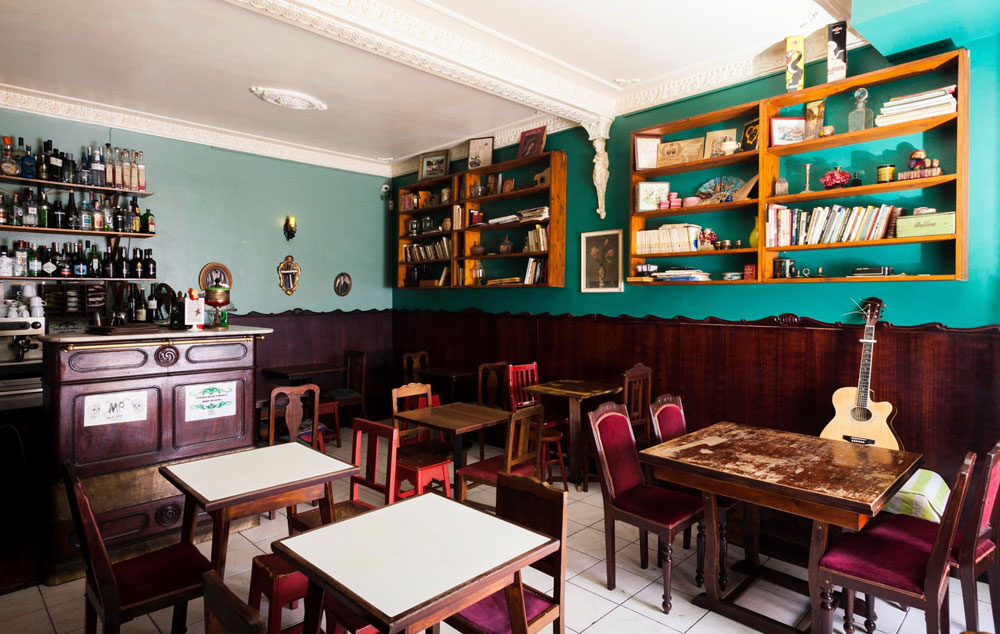
Located in the heart of Largo da Graça, Botequim is a place with history. Inaugurated in 1968 by the poet Natália Correia, Botequim was the scene of intellectual bohemia in the 70s and 80s, with names such as Ary dos Santos and José Cardoso Pires passing through. The venue closed in 1993, shortly after the writer's death, and reopened in 2010, thanks to four friends whose aim was to recapture the spirit of the past. Today, the Botequim retains its old dark wood counter and regularly hosts concerts and poetry sessions. The menu includes teas, snacks, puff pastries, toasts, glasses of wine and, of course, coffee with "cheirinho" (brandy) .
Opening hours
Friday to Friday: 11h00 - 2h00
Thursday: 18h00 - 2h00
(Closed on Wednesdays)
Located in the heart of Largo da Graça, Botequim is a place with history. Inaugurated in 1968 by the poet Natália Correia, Botequim was the scene of intellectual bohemia in the 70s and 80s, with names such as Ary dos Santos and José Cardoso Pires passing through. The venue closed in 1993, shortly after the writer's death, and reopened in 2010, thanks to four friends whose aim was to recapture the spirit of the past. Today, the Botequim retains its old dark wood counter and regularly hosts concerts and poetry sessions. The menu includes teas, snacks, puff pastries, toasts, glasses of wine and, of course, coffee with "cheirinho" (brandy) .
Opening hours
Friday to Friday: 11h00 - 2h00
Thursday: 18h00 - 2h00
(Closed on Wednesdays)
Located in the heart of Largo da Graça, Botequim is a place with history. Inaugurated in 1968 by the poet Natália Correia, Botequim was the scene of intellectual bohemia in the 70s and 80s, with names such as Ary dos Santos and José Cardoso Pires passing through. The venue closed in 1993, shortly after the writer's death, and reopened in 2010, thanks to four friends whose aim was to recapture the spirit of the past. Today, the Botequim retains its old dark wood counter and regularly hosts concerts and poetry sessions. The menu includes teas, snacks, puff pastries, toasts, glasses of wine and, of course, coffee with "cheirinho" (brandy) .
Opening hours
Friday to Friday: 11h00 - 2h00
Thursday: 18h00 - 2h00
(Closed on Wednesdays)
Botequim
Botequim
©Botequim
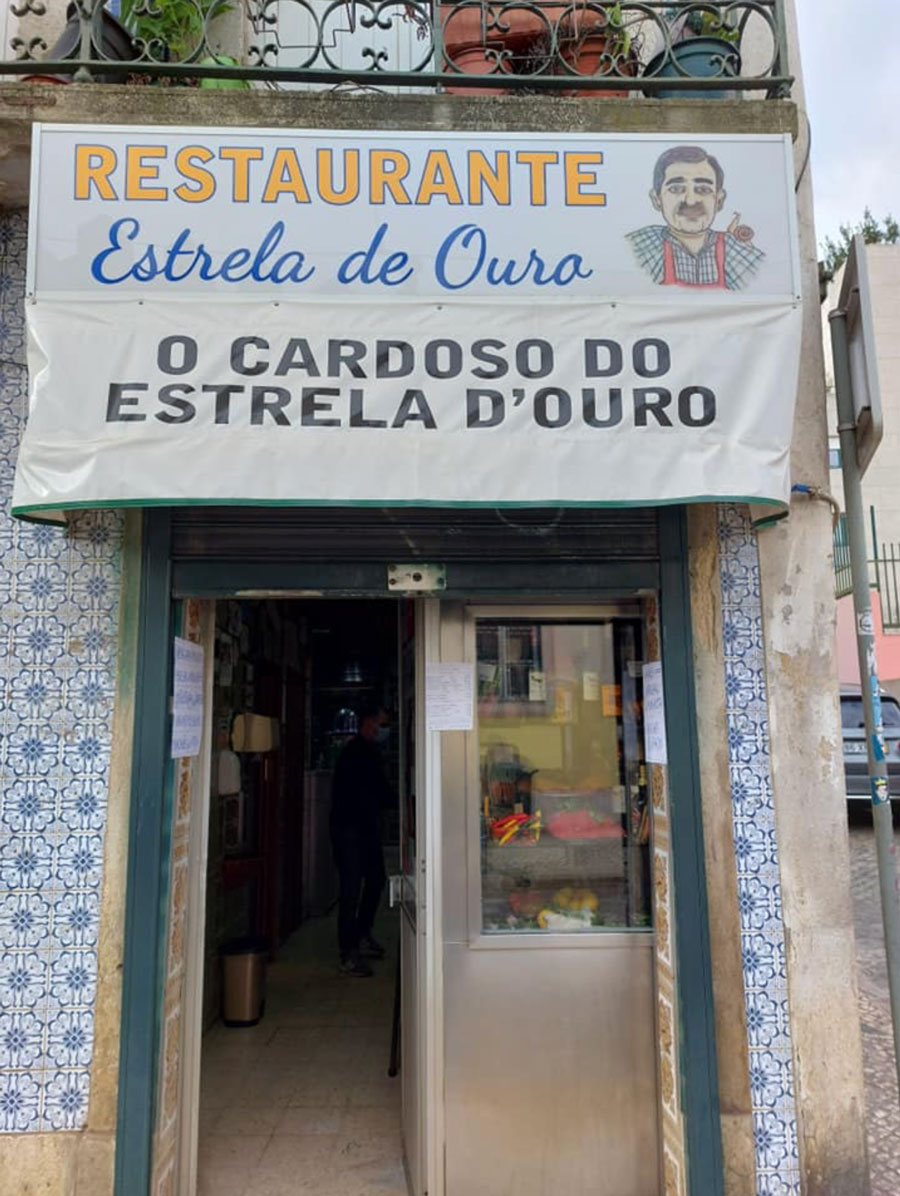
The Estrela D'Ouro restaurant belongs to Mr. Fernando Cardoso, a mythical figure in the Graça neighborhood. It's a classic neighborhood tavern that serves Portuguese specialties such as "bacalhau à minhota", "bitoque" and "alheira de Mirandela". There are only four tables and it's usually very busy, so we suggest you book in advance. Curiosity. Did you know that Mr. Cardoso proudly keeps all the references to his small restaurant in a library?
Average price 15€
Opening hours
12h00 - 15h00 / 18h30 - 21h00
(Closed Saturday and Sunday)
Cardoso do Estrela D'Ouro
Cardoso do Estrela D'Ouro
©Cardoso do Estrela D'Ouro
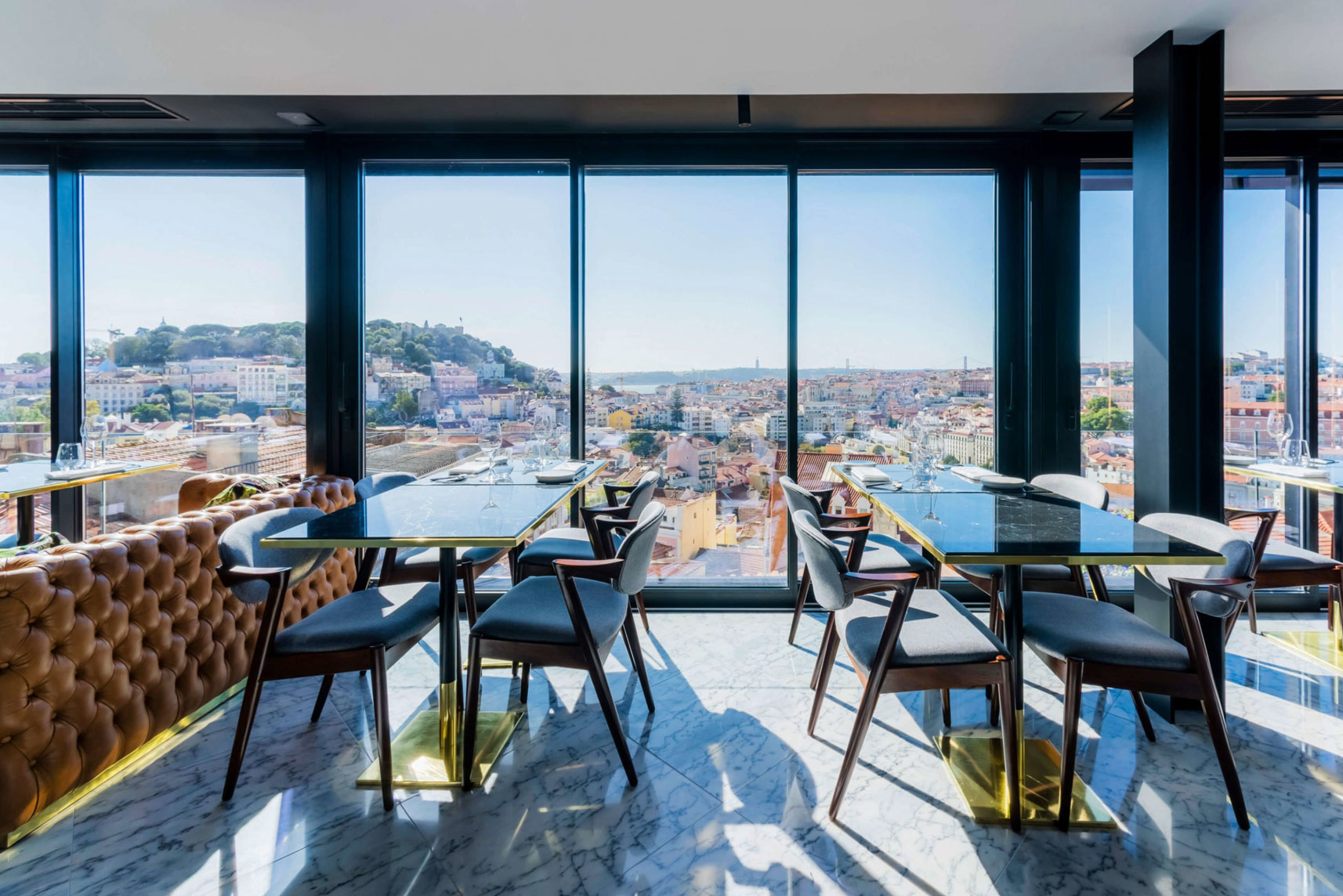
This panoramic haute cuisine restaurant was born in the Graça neighborhood more than three decades ago. The restaurant is known for offering a majestic view over the capital's seven hills and the Tagus estuary; but Via Graça is not just about this beautiful landscape. The cuisine, led by Chef Miguel Palma, features traditional Portuguese recipes with a contemporary twist. Among them are Octopus "à Lagareiro", "Bacalhau à Brás" and Duck rice, magret and foie gras. For the more adventurous, the Chef suggests the "To Discover" section, where audacity and versatility reign. "The view. The flavors. The experience."
Average price 70€
Opening hours
From 12:30 p.m. to 00:00 a.m.
This panoramic haute cuisine restaurant was born in the Graça neighborhood more than three decades ago. The restaurant is known for offering a majestic view over the capital's seven hills and the Tagus estuary; but Via Graça is not just about this beautiful landscape. The cuisine, led by Chef Miguel Palma, features traditional Portuguese recipes with a contemporary twist. Among them are Octopus "à Lagareiro", "Bacalhau à Brás" and Duck rice, magret and foie gras. For the more adventurous, the Chef suggests the "To Discover" section, where audacity and versatility reign. "The view. The flavors. The experience."
Average price 70€
Opening hours
From 12:30 p.m. to 00:00 a.m.
This panoramic haute cuisine restaurant was born in the Graça neighborhood more than three decades ago. The restaurant is known for offering a majestic view over the capital's seven hills and the Tagus estuary; but Via Graça is not just about this beautiful landscape. The cuisine, led by Chef Miguel Palma, features traditional Portuguese recipes with a contemporary twist. Among them are Octopus "à Lagareiro", "Bacalhau à Brás" and Duck rice, magret and foie gras. For the more adventurous, the Chef suggests the "To Discover" section, where audacity and versatility reign. "The view. The flavors. The experience."
Average price 70€
Opening hours
From 12:30 p.m. to 00:00 a.m.
This panoramic haute cuisine restaurant was born in the Graça neighborhood more than three decades ago. The restaurant is known for offering a majestic view over the capital's seven hills and the Tagus estuary; but Via Graça is not just about this beautiful landscape. The cuisine, led by Chef Miguel Palma, features traditional Portuguese recipes with a contemporary twist. Among them are Octopus "à Lagareiro", "Bacalhau à Brás" and Duck rice, magret and foie gras. For the more adventurous, the Chef suggests the "To Discover" section, where audacity and versatility reign. "The view. The flavors. The experience."
Average price 70€
Opening hours
From 12:30 p.m. to 00:00 a.m.
Via Graça
Via Graça
©Via Graça
Buyer testimonials
Buyer testimonials
“We bought a flat through De Brito Properties several months ago and they have always helped us with the work, the contracts, the procedures (quickly and reliably). They have become our point of reference in Portugal and help us with all our questions. We congratulate ourselves every day for having gone through them for our purchase in Lisbon.”
Isabelle Sebah
“We bought a flat several months ago from De Brito and we were always helped with the works, the electricity, the various stages. It really is the ideal agency for a long-term property transaction!”
Florence Crisanto
"Very good experience. Very professional and reliable agency, and even more so because they helped us every step of the way, a great advantage, especially when you don't speak the language. Thanks to the whole team for their availability and friendliness."
Véronica L.
“My husband and I had great help buying a house in Azeitão. Titti Curtaz was attentive, professional, friendly and truly listened to our needs and concerns as we tried to find the right house for us. She was generous and patient. Our Portuguese is very basic and she graciously helped us translate the information between the seller and us. I highly recommend her and De Brito Properties”
Christina S.
"Professional, serious and attentive team. Very good service and good products. Ideal accompaniment!"
Jean Louis D.
"Quality service that listens to the customer. Thank you very much for helping us with our purchase and installation in Lisbon."
Bernardette Fernandes
See our selection of properties in Graça
See our selection of properties for sale in Graça
See our selection of properties in Graça
See our selection of properties in Graça
See our selection of properties for sale in Graça
See our selection of properties in Graça
We are your "Property Finder"
We are your "Property Finder"
Didn't find the property you're looking for on our website? Leave us your criteria and we will search the market and prepare a selection that suits your request.

