


Baixa - Chiado
Baixa - Chiado
A little about the history of Baixa - Chiado...
1 - A bit about the history of the Chiado neighborhood...
The history of the Chiado district, part of the parish of Santa Maria Maior, dates back to the 12th century, when King Afonso Henriques conquered Lisbon from the Moors.
After the conquest, the parish of Nossa Senhora dos Mártires was formed here, built over the cemetery of the Crusaders who supported him.
Successively, convents of various religious orders and noblemen's palaces were built here, such as the Barão de Quintela Palace - currently converted into a restaurant space known as "Palácio Chiado".
It was also in this area that one of the main entrances to the Fernandina Fence was located, the Santa Catarina gate, near what is now Largo do Chiado. This fence, built by King Fernando I in 1373 to fortify the city of Lisbon, was declared a National Monument in 1910. At the Espaço Chiado shopping center you can see one of its towers, preserved as a testimony to this episode in history.
Once known as Colina de São Francisco, it was from the 15th century onwards that it took on the name of Chiado.
1 - A bit about the history of the Chiado neighborhood...
The history of the Chiado district, part of the parish of Santa Maria Maior, dates back to the 12th century, when King Afonso Henriques conquered Lisbon from the Moors.
After the conquest, the parish of Nossa Senhora dos Mártires was formed here, built over the cemetery of the Crusaders who supported him.
Successively, convents of various religious orders and noblemen's palaces were built here, such as the Barão de Quintela Palace - currently converted into a restaurant space known as "Palácio Chiado".
It was also in this area that one of the main entrances to the Fernandina Fence was located, the Santa Catarina gate, near what is now Largo do Chiado. This fence, built by King Fernando I in 1373 to fortify the city of Lisbon, was declared a National Monument in 1910. At the Espaço Chiado shopping center you can see one of its towers, preserved as a testimony to this episode in history.
Once known as Colina de São Francisco, it was from the 15th century onwards that it took on the name of Chiado.
1 - A bit about the history of the Chiado neighborhood...
The history of the Chiado district, part of the parish of Santa Maria Maior, dates back to the 12th century, when King Afonso Henriques conquered Lisbon from the Moors.
After the conquest, the parish of Nossa Senhora dos Mártires was formed here, built over the cemetery of the Crusaders who supported him.
Successively, convents of various religious orders and noblemen's palaces were built here, such as the Barão de Quintela Palace - currently converted into a restaurant space known as "Palácio Chiado".
It was also in this area that one of the main entrances to the Fernandina Fence was located, the Santa Catarina gate, near what is now Largo do Chiado. This fence, built by King Fernando I in 1373 to fortify the city of Lisbon, was declared a National Monument in 1910. At the Espaço Chiado shopping center you can see one of its towers, preserved as a testimony to this episode in history.
Once known as Colina de São Francisco, it was from the 15th century onwards that it took on the name of Chiado.
1 - A bit about the history of the Chiado neighborhood...
The history of the Chiado district, part of the parish of Santa Maria Maior, dates back to the 12th century, when King Afonso Henriques conquered Lisbon from the Moors.
After the conquest, the parish of Nossa Senhora dos Mártires was formed here, built over the cemetery of the Crusaders who supported him.
Successively, convents of various religious orders and noblemen's palaces were built here, such as the Barão de Quintela Palace - currently converted into a restaurant space known as "Palácio Chiado".
It was also in this area that one of the main entrances to the Fernandina Fence was located, the Santa Catarina gate, near what is now Largo do Chiado. This fence, built by King Fernando I in 1373 to fortify the city of Lisbon, was declared a National Monument in 1910. At the Espaço Chiado shopping center you can see one of its towers, preserved as a testimony to this episode in history.
Once known as Colina de São Francisco, it was from the 15th century onwards that it took on the name of Chiado.
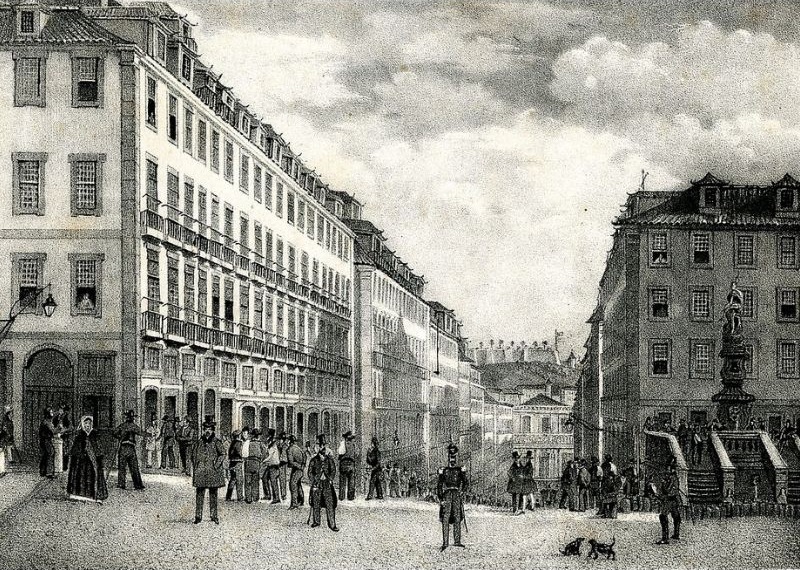
Rua de Santa Catarina, uma das antigas entradas de Lisboa © e-Chiado.pt
Although the origin of this name remains a mystery to this day, there are several theories behind it. Some argue that the name comes from the owner of a tavern on Rua Garret; others say that it was due to a poet who frequented the area, António Ribeiro Chiado; and there are those who associate the name "Chiado" with the squeaking of the carriages which, when descending its steep streets, squeaked a lot - this characteristic noise (« chiado » in portuguese) would have given the neighborhood its name.
In the 17th and 18th centuries, commercial and cultural venues such as patisseries and bookshops began to establish themselves here. The neighborhood thus began to gain fame and movement.
After the 1755 earthquake, the area was subject to Marquês de Pombal's reconstruction plan and a cosmopolitan Chiado, as we know it today, was born.
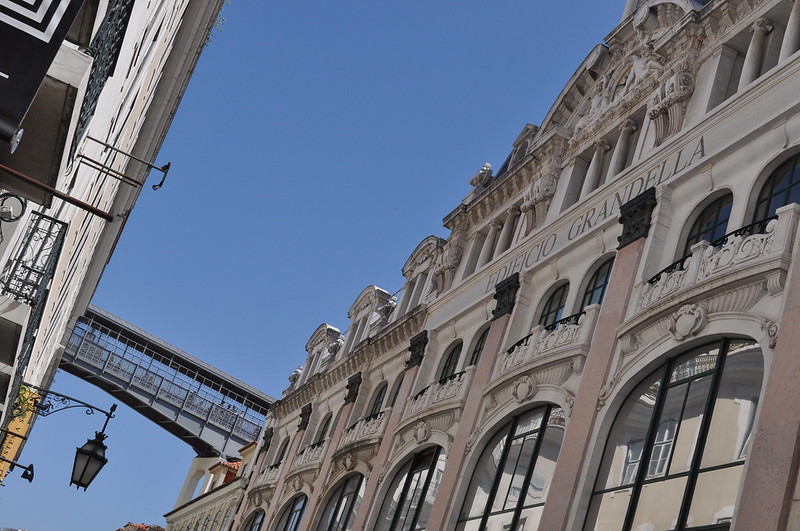
Walking through its narrow streets, it was common to bump into artists, writers and influential people. In 1988, a fire destroyed an important part of Chiado, including the Grandes Armazéns do Chiado. The building, rebuilt by the Portuguese architect Álvaro Siza Vieira, now houses a shopping center and a hotel.
Although the origin of this name remains a mystery to this day, there are several theories behind it. Some argue that the name comes from the owner of a tavern on Rua Garret; others say that it was due to a poet who frequented the area, António Ribeiro Chiado; and there are those who associate the name "Chiado" with the squeaking of the carriages which, when descending its steep streets, squeaked a lot - this characteristic noise (« chiado » in portuguese) would have given the neighborhood its name.
In the 17th and 18th centuries, commercial and cultural venues such as patisseries and bookshops began to establish themselves here. The neighborhood thus began to gain fame and movement.
After the 1755 earthquake, the area was subject to Marquês de Pombal's reconstruction plan and a cosmopolitan Chiado, as we know it today, was born.
Walking through its narrow streets, it was common to bump into artists, writers and influential people. In 1988, a fire destroyed an important part of Chiado, including the Grandes Armazéns do Chiado. The building, rebuilt by the Portuguese architect Álvaro Siza Vieira, now houses a shopping center and a hotel.
Although the origin of this name remains a mystery to this day, there are several theories behind it. Some argue that the name comes from the owner of a tavern on Rua Garret; others say that it was due to a poet who frequented the area, António Ribeiro Chiado; and there are those who associate the name "Chiado" with the squeaking of the carriages which, when descending its steep streets, squeaked a lot - this characteristic noise (« chiado » in portuguese) would have given the neighborhood its name.
In the 17th and 18th centuries, commercial and cultural venues such as patisseries and bookshops began to establish themselves here. The neighborhood thus began to gain fame and movement.
After the 1755 earthquake, the area was subject to Marquês de Pombal's reconstruction plan and a cosmopolitan Chiado, as we know it today, was born.
Walking through its narrow streets, it was common to bump into artists, writers and influential people. In 1988, a fire destroyed an important part of Chiado, including the Grandes Armazéns do Chiado. The building, rebuilt by the Portuguese architect Álvaro Siza Vieira, now houses a shopping center and a hotel.
Although the origin of this name remains a mystery to this day, there are several theories behind it. Some argue that the name comes from the owner of a tavern on Rua Garret; others say that it was due to a poet who frequented the area, António Ribeiro Chiado; and there are those who associate the name "Chiado" with the squeaking of the carriages which, when descending its steep streets, squeaked a lot - this characteristic noise (« chiado » in portuguese) would have given the neighborhood its name.
In the 17th and 18th centuries, commercial and cultural venues such as patisseries and bookshops began to establish themselves here. The neighborhood thus began to gain fame and movement.
After the 1755 earthquake, the area was subject to Marquês de Pombal's reconstruction plan and a cosmopolitan Chiado, as we know it today, was born.
Walking through its narrow streets, it was common to bump into artists, writers and influential people. In 1988, a fire destroyed an important part of Chiado, including the Grandes Armazéns do Chiado. The building, rebuilt by the Portuguese architect Álvaro Siza Vieira, now houses a shopping center and a hotel.
Although the origin of this name remains a mystery to this day, there are several theories behind it. Some argue that the name comes from the owner of a tavern on Rua Garret; others say that it was due to a poet who frequented the area, António Ribeiro Chiado; and there are those who associate the name "Chiado" with the squeaking of the carriages which, when descending its steep streets, squeaked a lot - this characteristic noise (« chiado » in portuguese) would have given the neighborhood its name.
In the 17th and 18th centuries, commercial and cultural venues such as patisseries and bookshops began to establish themselves here. The neighborhood thus began to gain fame and movement.
After the 1755 earthquake, the area was subject to Marquês de Pombal's reconstruction plan and a cosmopolitan Chiado, as we know it today, was born.
Walking through its narrow streets, it was common to bump into artists, writers and influential people. In 1988, a fire destroyed an important part of Chiado, including the Grandes Armazéns do Chiado. The building, rebuilt by the Portuguese architect Álvaro Siza Vieira, now houses a shopping center and a hotel.
Lisbon City Plan
Palácio Nacional da Ajuda © Miguel Hugo Carriço
a. Architecture in the Chiado district
Despite the damage the neighborhood has suffered over the centuries, it is still possible to find buildings with distinctive architectural features in its streets.
In Largo do Chiado there are two baroque churches; in Largo da Trindade there is a neoclassical theater and in Largo Rafael Bordalo Pinheiro there is still the building where the artist after whom the square is named lived, with its façade covered in tiles. In Largo do Carmo, you can also visit the ruins of the Carmo Convent, once the capital's main Gothic church and one of the main testimonies of the 1755 earthquake.
2 - The parish of Santa Maria Maior in numbers
|
Santa Maria Maior |
|
|
|
|
|
|
|
|
|
|
|
|
|
|
|
|
|
|
|
|
|
|
|
|
|
|
|
|
|
|
* (Population aged 65 or over / Population under 15) * 100
** Price Report August 2025 Idealista
*** Price Report August 2025 Idealista
Pastry Shop “A Tentadora” © Universidade Nova de Lisboa
Paragraph
Alfama thus began to lose its importance and, although it wasn't affected by the earthquake, it was left behind.
by the earthquake, it was left abandoned by the central government until the 20th century - being identified
being identified as a dangerous part of the city.
Despite its decadence in the 19th century Alfama saw the emergence of a musical style that is now considered to be an intangible UNESCO intangible heritage - Fado! Born in the streets, bars and prostitution centres of
Alfama, Fado began to be heard at court and gained another kind of prominence.
With the emergence of the fado singer Amália Rodrigues, fado became internationally recognised.
recognised internationally.
Today, Alfama is one of the best known and most visited neighbourhoods in the city. Here
you can feel the neighbourhood life, you can feel the fado, you can feel the essence of Lisbon!
Paragraph
Mosteiro dos Jerónimos © Wikimedia – CC BY-SA 4.0 – Ingo Mehling (Imagem Original)
Church of Our Lady of the Incarnation © Wikimedia - Maragato1976 (Original image)
Trindade Theatre © Wikimedia - OsvaldoGago (Original Image)
Casa do Ferreira das Tabuletas © Wikimedia - Alegna13 (Original Image)
Stationery Shop “A Concorrente” © Universidade Nova de Lisboa
In Campo de Ourique there is quantity and quality. As you walk around the neighborhood, you'll find all kinds of stores - cafés, pastry stores, restaurants, grocery stores and a variety of stores. It is also home to some of the best schools and colleges in the city, such as the "Liceu Pedro Nunes" and the "Salesianos de Lisboa".
Campo de Ourique is very well located, in the center of the triangle formed by Amoreiras, Estrela and Prazeres. Just an 11-minute walk from Amoreiras Shopping Center and a 15-minute walk from Jardim da Estrela.
The famous streetcar 28, which runs through Lisbon's historic neighborhoods, has its last stop here, next to the Prazeres Cemetery.
Several streetcars and buses pass through the streets of Campo de Ourique throughout the day. In three years' time, the neighborhood will also have a metro station.
Foto: flickr | @abz.rec
3- Why choose to live in the Chiado neighborhood?
The center of commerce and cultural activity in Lisbon, the Chiado district is one of the busiest and liveliest in the Portuguese capital.
If you live in this neighborhood, you'll have many of the city's best restaurants, stores, museums and theaters on your doorstep, such as the Trindade Theater, the S. Luiz Theater and the São Carlos Theater - the only opera house in Portugal.
Chiado is also the stage for emblematic events such as Vogue Fashion's Night Out, and is considered Lisbon's "fashion" hotspot.
With Bairro Alto (500m), Cais do Sodré (500m) and Rossio (600m) as its neighbors, Chiado enjoys an iconic location.
In terms of public transport, the neighborhood is well equipped, with several buses and a metro station: the "Baixa-Chiado" station, which has connections to the Green and Blue lines.
Traffic in the neighborhood is limited, preserving the tranquility of the area.
3- Why choose to live in the Chiado neighborhood?
The center of commerce and cultural activity in Lisbon, the Chiado district is one of the busiest and liveliest in the Portuguese capital.
If you live in this neighborhood, you'll have many of the city's best restaurants, stores, museums and theaters on your doorstep, such as the Trindade Theater, the S. Luiz Theater and the São Carlos Theater - the only opera house in Portugal.
Chiado is also the stage for emblematic events such as Vogue Fashion's Night Out, and is considered Lisbon's "fashion" hotspot.
With Bairro Alto (500m), Cais do Sodré (500m) and Rossio (600m) as its neighbors, Chiado enjoys an iconic location.
In terms of public transport, the neighborhood is well equipped, with several buses and a metro station: the "Baixa-Chiado" station, which has connections to the Green and Blue lines.
Traffic in the neighborhood is limited, preserving the tranquility of the area.
3- Why choose to live in the Chiado neighborhood?
The center of commerce and cultural activity in Lisbon, the Chiado district is one of the busiest and liveliest in the Portuguese capital.
If you live in this neighborhood, you'll have many of the city's best restaurants, stores, museums and theaters on your doorstep, such as the Trindade Theater, the S. Luiz Theater and the São Carlos Theater - the only opera house in Portugal.
Chiado is also the stage for emblematic events such as Vogue Fashion's Night Out, and is considered Lisbon's "fashion" hotspot.
With Bairro Alto (500m), Cais do Sodré (500m) and Rossio (600m) as its neighbors, Chiado enjoys an iconic location.
In terms of public transport, the neighborhood is well equipped, with several buses and a metro station: the "Baixa-Chiado" station, which has connections to the Green and Blue lines.
Traffic in the neighborhood is limited, preserving the tranquility of the area.
@soniabonet
INSERT YOUR TITLE HERE
What to see and do in Chiado?
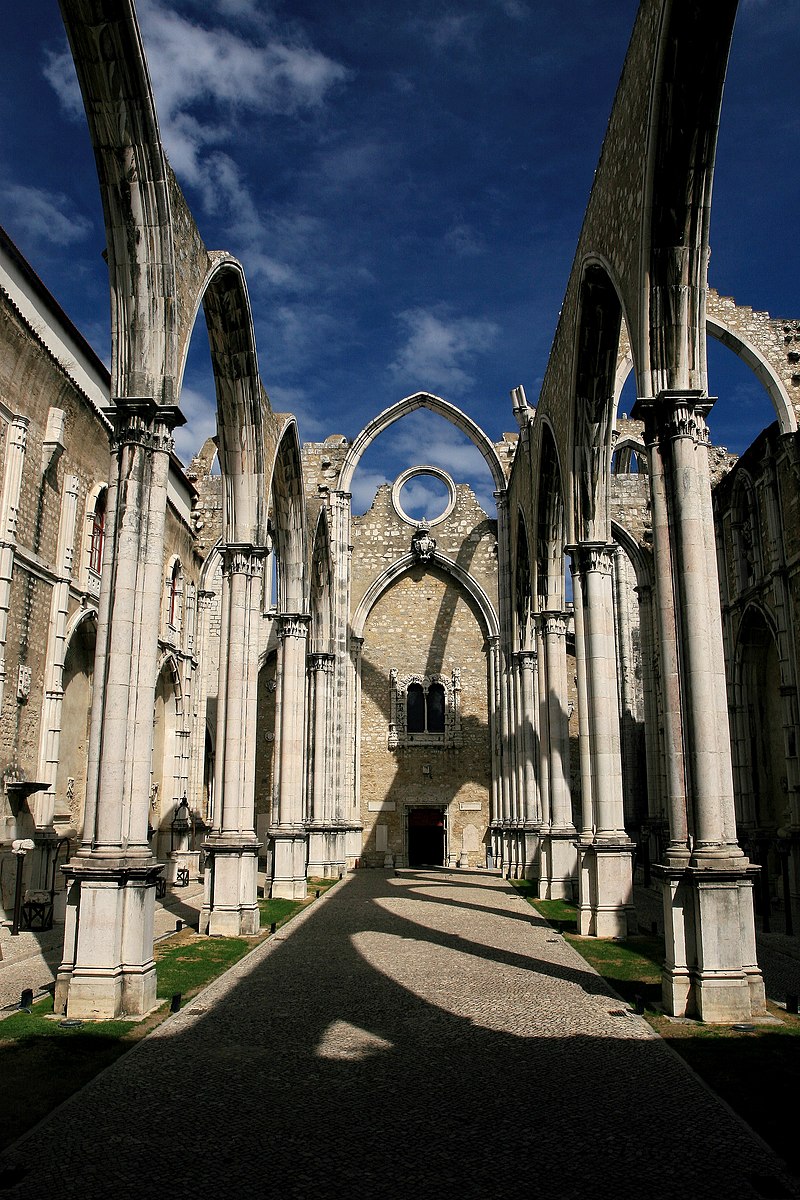
With part of its building destroyed in the 1755 earthquake, today the Carmo Convent houses an Archaeological Museum in its ruins. Founded in 1864, this museum includes pieces of historical, archaeological and artistic value ranging from prehistoric to contemporary times. Among the museum's main attractions are two mummies offered by the Count of São Januário. Open-air, many visit the site just to contemplate the beauty of its Gothic-style arches, which have withstood the disaster. One of the most impressive places in Lisbon!
Normal ticket price 5€
Opening hours
Winter opening hours (November to April): From 10 a.m. to 6 p.m. (Closed on Sundays)
Summer opening hours (May to October): 10 a.m. to 7 p.m. (Closed on Sundays)
With part of its building destroyed in the 1755 earthquake, today the Carmo Convent houses an Archaeological Museum in its ruins. Founded in 1864, this museum includes pieces of historical, archaeological and artistic value ranging from prehistoric to contemporary times. Among the museum's main attractions are two mummies offered by the Count of São Januário. Open-air, many visit the site just to contemplate the beauty of its Gothic-style arches, which have withstood the disaster. One of the most impressive places in Lisbon!
Normal ticket price 5€
Opening hours
Winter opening hours (November to April): From 10 a.m. to 6 p.m. (Closed on Sundays)
Summer opening hours (May to October): 10 a.m. to 7 p.m. (Closed on Sundays)
With part of its building destroyed in the 1755 earthquake, today the Carmo Convent houses an Archaeological Museum in its ruins. Founded in 1864, this museum includes pieces of historical, archaeological and artistic value ranging from prehistoric to contemporary times. Among the museum's main attractions are two mummies offered by the Count of São Januário. Open-air, many visit the site just to contemplate the beauty of its Gothic-style arches, which have withstood the disaster. One of the most impressive places in Lisbon!
Normal ticket price 5€
Opening hours
Winter opening hours (November to April): From 10 a.m. to 6 p.m. (Closed on Sundays)
Summer opening hours (May to October): 10 a.m. to 7 p.m. (Closed on Sundays)
With part of its building destroyed in the 1755 earthquake, today the Carmo Convent houses an Archaeological Museum in its ruins. Founded in 1864, this museum includes pieces of historical, archaeological and artistic value ranging from prehistoric to contemporary times. Among the museum's main attractions are two mummies offered by the Count of São Januário. Open-air, many visit the site just to contemplate the beauty of its Gothic-style arches, which have withstood the disaster. One of the most impressive places in Lisbon!
Normal ticket price 5€
Opening hours
Winter opening hours (November to April): From 10 a.m. to 6 p.m. (Closed on Sundays)
Summer opening hours (May to October): 10 a.m. to 7 p.m. (Closed on Sundays)
Ruins of the Carmo Convent
Ruins of the Carmo Convent
©Câmara Municipal de Lisboa - Jardim da Parada
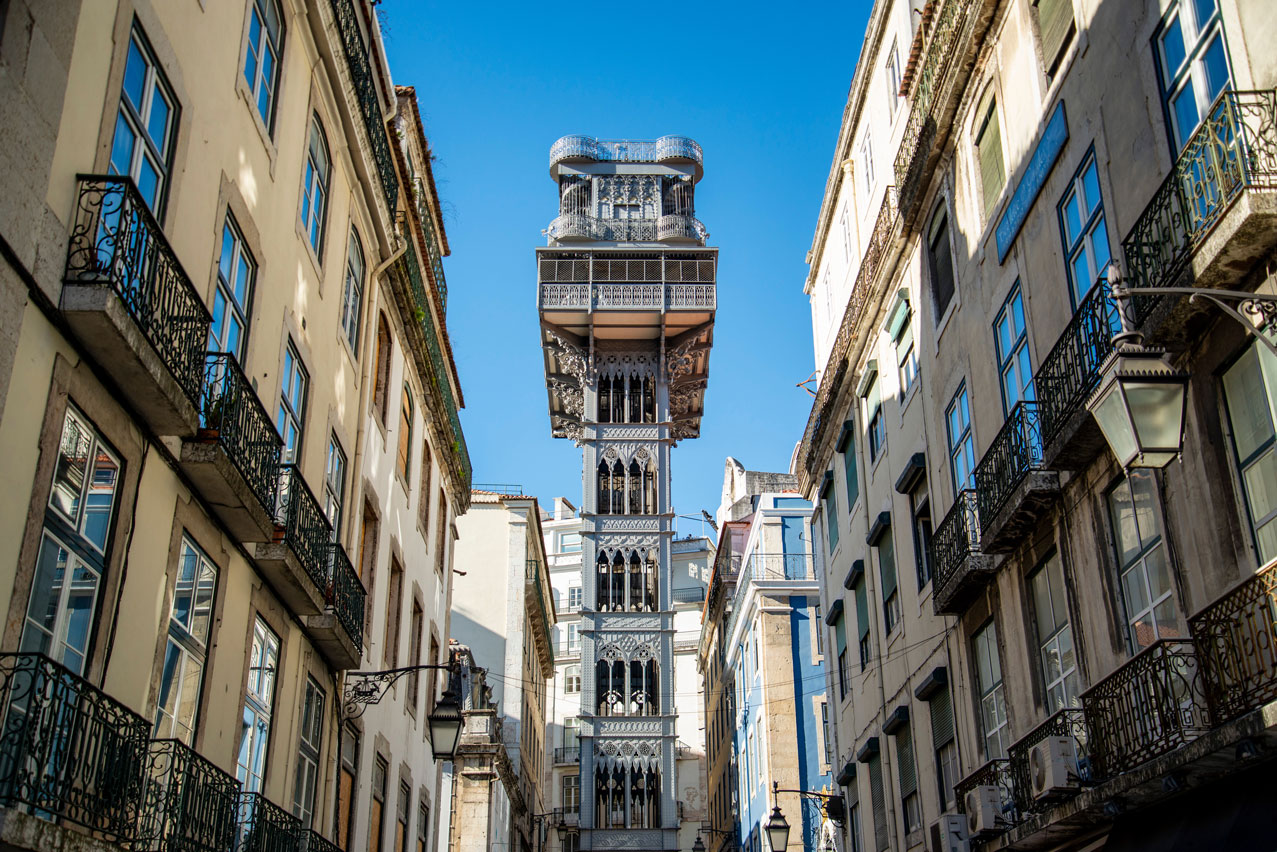
The Santa Justa Elevator connects Rua do Ouro to Largo do Carmo and is the only vertical elevator in the city, measuring around 45m. Its neo-Gothic structure, designed by one of Gustave Eiffel's disciples, makes this elevator not only a public transport service, but also one of the most famous historical monuments in downtown Lisbon. The Elevador de Santa Justa is also one of the best viewpoints in the city, offering incredible views over downtown, St. George's Castle and the River Tagus. When you reach the top, enjoy a drink at one of Lisbon's best rooftops, "Topo Chiado".
Normal ticket price 5.30€ (2 trips)
Elevator opening hours
Summer opening hours (May 1 to October 31): 7:30 a.m. - 11:00 p.m.
Winter opening hours (November 1 to April 30): 7:30 a.m. - 9:00 p.m.
Topo Chiado opening hours
Monday to Saturday: 11h00 - 00h00
Sunday: 11h00 - 22h00
The Santa Justa Elevator connects Rua do Ouro to Largo do Carmo and is the only vertical elevator in the city, measuring around 45m. Its neo-Gothic structure, designed by one of Gustave Eiffel's disciples, makes this elevator not only a public transport service, but also one of the most famous historical monuments in downtown Lisbon. The Elevador de Santa Justa is also one of the best viewpoints in the city, offering incredible views over downtown, St. George's Castle and the River Tagus. When you reach the top, enjoy a drink at one of Lisbon's best rooftops, "Topo Chiado".
Normal ticket price 5.30€ (2 trips)
Elevator opening hours
Summer opening hours (May 1 to October 31): 7:30 a.m. - 11:00 p.m.
Winter opening hours (November 1 to April 30): 7:30 a.m. - 9:00 p.m.
Topo Chiado opening hours
Monday to Saturday: 11h00 - 00h00
Sunday: 11h00 - 22h00
The Santa Justa Elevator connects Rua do Ouro to Largo do Carmo and is the only vertical elevator in the city, measuring around 45m. Its neo-Gothic structure, designed by one of Gustave Eiffel's disciples, makes this elevator not only a public transport service, but also one of the most famous historical monuments in downtown Lisbon. The Elevador de Santa Justa is also one of the best viewpoints in the city, offering incredible views over downtown, St. George's Castle and the River Tagus. When you reach the top, enjoy a drink at one of Lisbon's best rooftops, "Topo Chiado".
Normal ticket price 5.30€ (2 trips)
Elevator opening hours
Summer opening hours (May 1 to October 31): 7:30 a.m. - 11:00 p.m.
Winter opening hours (November 1 to April 30): 7:30 a.m. - 9:00 p.m.
Topo Chiado opening hours
Monday to Saturday: 11h00 - 00h00
Sunday: 11h00 - 22h00
The Santa Justa Elevator connects Rua do Ouro to Largo do Carmo and is the only vertical elevator in the city, measuring around 45m. Its neo-Gothic structure, designed by one of Gustave Eiffel's disciples, makes this elevator not only a public transport service, but also one of the most famous historical monuments in downtown Lisbon. The Elevador de Santa Justa is also one of the best viewpoints in the city, offering incredible views over downtown, St. George's Castle and the River Tagus. When you reach the top, enjoy a drink at one of Lisbon's best rooftops, "Topo Chiado".
Normal ticket price 5.30€ (2 trips)
Elevator opening hours
Summer opening hours (May 1 to October 31): 7:30 a.m. - 11:00 p.m.
Winter opening hours (November 1 to April 30): 7:30 a.m. - 9:00 p.m.
Topo Chiado opening hours
Monday to Saturday: 11h00 - 00h00
Sunday: 11h00 - 22h00
Santa Justa Elevator
Santa Justa Elevator
@visitlisboa
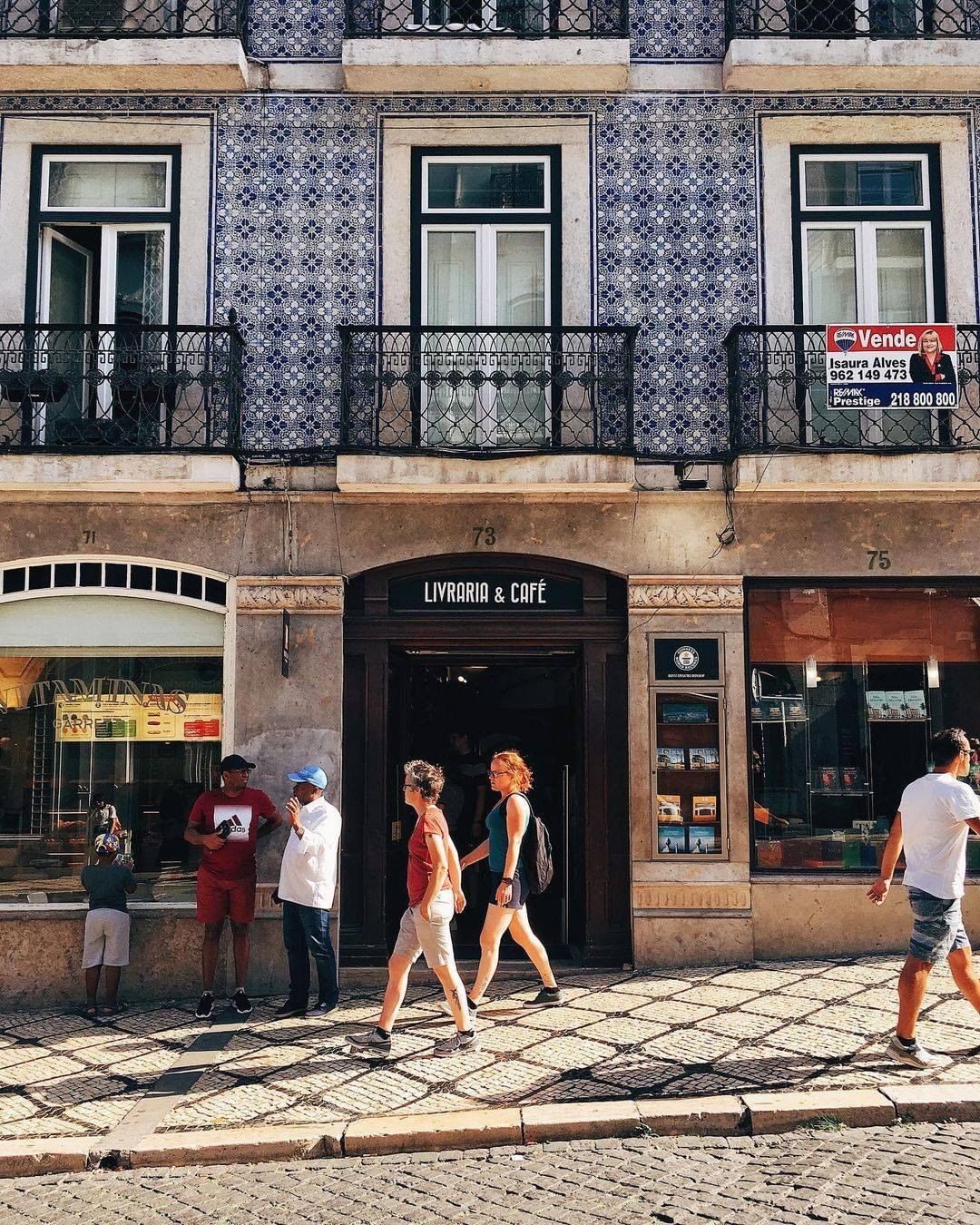
Inaugurated in 1732, the Bertrand bookstore is the oldest bookstore in the world in operation and has been distinguished by Guinness World Records since 2011. This bookshop is located in Rua Garrett and is divided into 7 rooms with themes alluding to famous Portuguese writers: Aquilino Ribeiro, José Saramago, Eça de Queiroz, Almada Negreiros, Alexandre Herculano, Sophia de Mello Breyner and Fernando Pessoa. In the latter, dedicated to Fernando Pessoa, there is a café with snacks, Café Bertrand. This space was opened on the bookshop's 285th anniversary and features dishes based on the gastronomy books sold here, in a journey that takes us from Trás-os-Montes ( north of Portugal) to the Algarve (south of Portugal).
Opening hours
From 9 a.m. to 10 p.m.
Bertrand Bookshop
Bertrand Bookshop
@casafernandopessoa
©livrariabertrandchiado
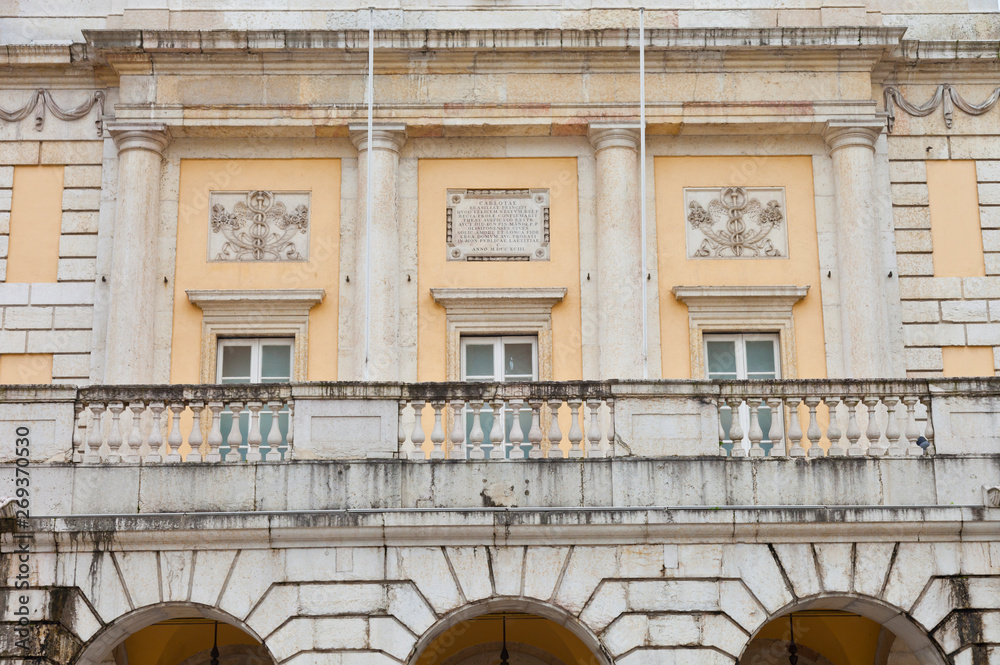
Founded in 1793, the Teatro de São Carlos has always been a theater dedicated to the production and presentation of opera and choral and symphonic music. Great national and international musical figures have passed through here and
today it is home to the Portuguese Symphony Orchestra and the Teatro Nacional de São Carlos Choir - the only professional choir in the country. In this neoclassical building (the first of its kind to be built in Lisbon), the main hall stands out, with its elliptical floor plan sumptuously decorated with rococo details. Other cultural events are also held here, such as ballets and various concerts. Check out the schedule of events here: Teatro Nacional de São Carlos (tnsc.pt)
Founded in 1793, the Teatro de São Carlos has always been a theater dedicated to the production and presentation of opera and choral and symphonic music. Great national and international musical figures have passed through here and today it is home to the Portuguese Symphony Orchestra and the Teatro Nacional de São Carlos Choir - the only professional choir in the country. In this neoclassical building (the first of its kind to be built in Lisbon), the main hall stands out, with its elliptical floor plan sumptuously decorated with rococo details. Other cultural events are also held here, such as ballets and various concerts. Check out the schedule of events here: Teatro Nacional de São Carlos (tnsc.pt)
Founded in 1793, the Teatro de São Carlos has always been a theater dedicated to the production and presentation of opera and choral and symphonic music. Great national and international musical figures have passed through here and today it is home to the Portuguese Symphony Orchestra and the Teatro Nacional de São Carlos Choir - the only professional choir in the country. In this neoclassical building (the first of its kind to be built in Lisbon), the main hall stands out, with its elliptical floor plan sumptuously decorated with rococo details. Other cultural events are also held here, such as ballets and various concerts. Check out the schedule of events here: Teatro Nacional de São Carlos (tnsc.pt)
São Carlos Theatre
São Carlos Theatre
@amoreiras360view
@rodrigosimas
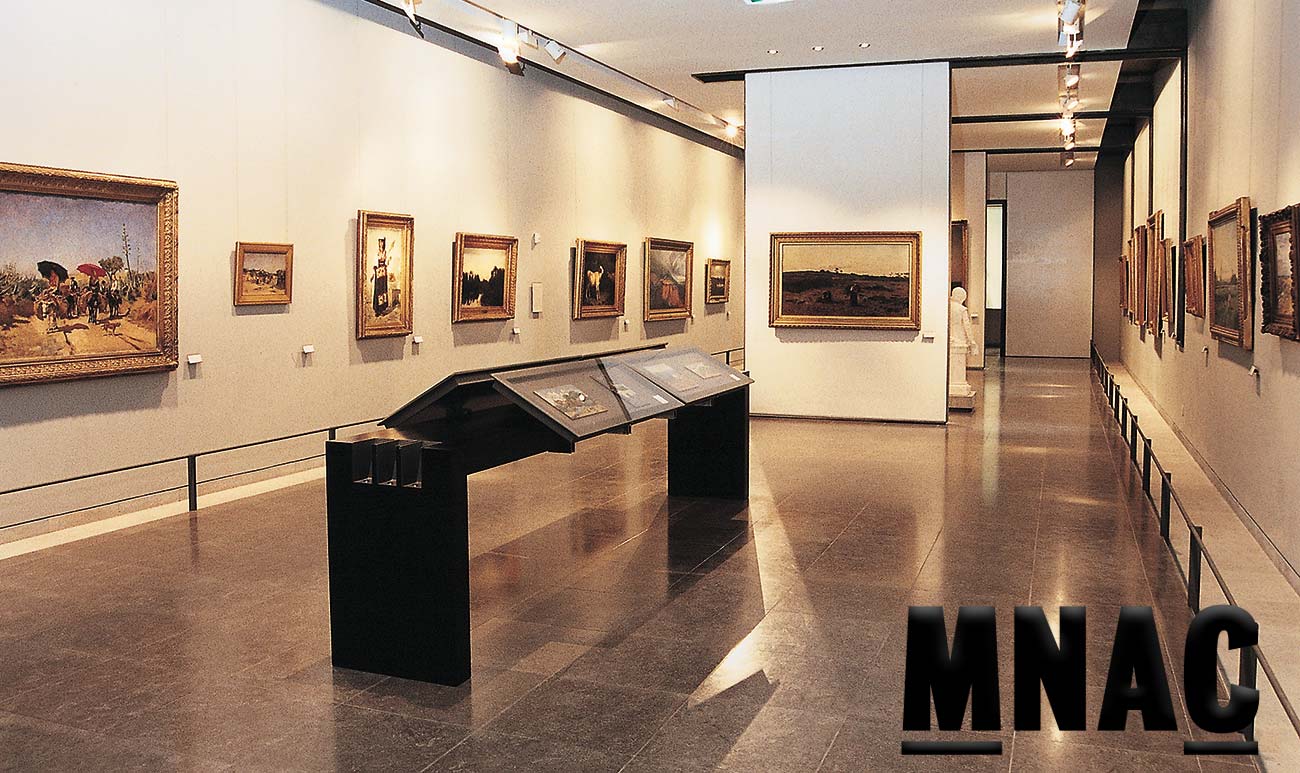
Founded in 1911 on the site of the former convent of São Francisco da Cidade, the National Museum of Contemporary Art, popularly known as the "Chiado Museum", houses an important part of the history of Portuguese art. With works ranging from the second half of the 19th century to the present day, here you'll find paintings, drawings and sculptures from the periods of Romanticism, Naturalism, Surrealism and Portuguese Modernism. The museum also exhibits pieces by important international artists and hosts temporary exhibitions. See the program here: MNAC: Programação (museuartecontemporanea.gov.pt)
Normal ticket price 4.5€
Free entry on Sundays and public holidays until 2pm for all citizens residing in Portugal
Opening hours
10h00 - 13h00 / 14h00 - 18h00 (Closed on Mondays)
Founded in 1911 on the site of the former convent of São Francisco da Cidade, the National Museum of Contemporary Art, popularly known as the "Chiado Museum", houses an important part of the history of Portuguese art. With works ranging from the second half of the 19th century to the present day, here you'll find paintings, drawings and sculptures from the periods of Romanticism, Naturalism, Surrealism and Portuguese Modernism. The museum also exhibits pieces by important international artists and hosts temporary exhibitions. See the program here: MNAC: Programação (museuartecontemporanea.gov.pt)
Normal ticket price 4.5€
Free entry on Sundays and public holidays until 2pm for all citizens residing in Portugal
Opening hours
10h00 - 13h00 / 14h00 - 18h00 (Closed on Mondays)
Founded in 1911 on the site of the former convent of São Francisco da Cidade, the National Museum of Contemporary Art, popularly known as the "Chiado Museum", houses an important part of the history of Portuguese art. With works ranging from the second half of the 19th century to the present day, here you'll find paintings, drawings and sculptures from the periods of Romanticism, Naturalism, Surrealism and Portuguese Modernism. The museum also exhibits pieces by important international artists and hosts temporary exhibitions. See the program here: MNAC: Programação (museuartecontemporanea.gov.pt)
Normal ticket price 4.5€
Free entry on Sundays and public holidays until 2pm for all citizens residing in Portugal
Opening hours
10h00 - 13h00 / 14h00 - 18h00 (Closed on Mondays)
Founded in 1911 on the site of the former convent of São Francisco da Cidade, the National Museum of Contemporary Art, popularly known as the "Chiado Museum", houses an important part of the history of Portuguese art. With works ranging from the second half of the 19th century to the present day, here you'll find paintings, drawings and sculptures from the periods of Romanticism, Naturalism, Surrealism and Portuguese Modernism. The museum also exhibits pieces by important international artists and hosts temporary exhibitions. See the program here: MNAC: Programação (museuartecontemporanea.gov.pt)
Normal ticket price 4.5€
Free entry on Sundays and public holidays until 2pm for all citizens residing in Portugal
Opening hours
10h00 - 13h00 / 14h00 - 18h00 (Closed on Mondays)
Founded in 1911 on the site of the former convent of São Francisco da Cidade, the National Museum of Contemporary Art, popularly known as the "Chiado Museum", houses an important part of the history of Portuguese art. With works ranging from the second half of the 19th century to the present day, here you'll find paintings, drawings and sculptures from the periods of Romanticism, Naturalism, Surrealism and Portuguese Modernism. The museum also exhibits pieces by important international artists and hosts temporary exhibitions. See the program here: MNAC: Programação (museuartecontemporanea.gov.pt)
Normal ticket price 4.5€
Free entry on Sundays and public holidays until 2pm for all citizens residing in Portugal
Opening hours
10h00 - 13h00 / 14h00 - 18h00 (Closed on Mondays)
MNAC: National Museum of Contemporary Art in Chiado
MNAC: National Museum of Contemporary Art in Chiado
@luissm_photography
©visitlisboa
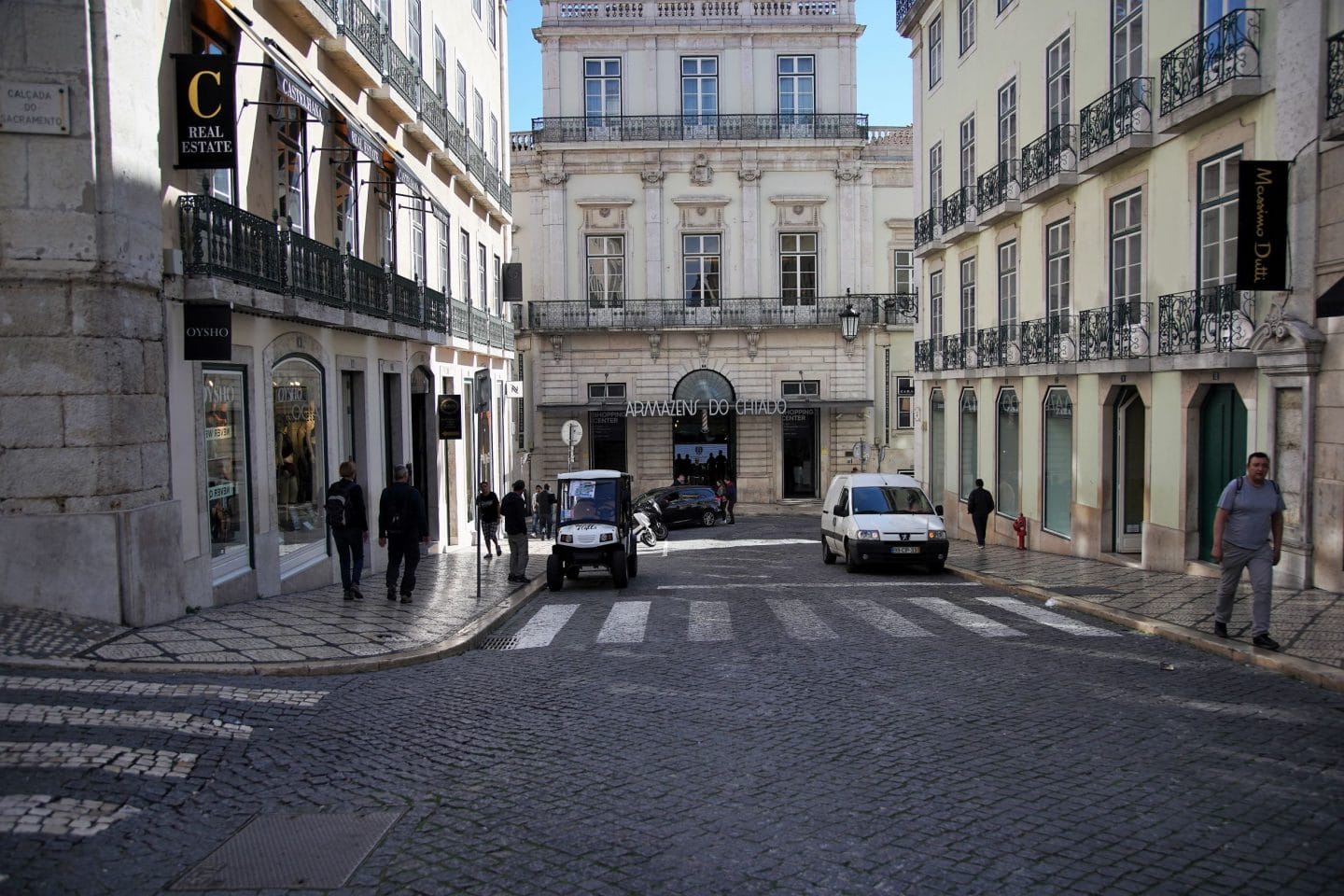
The Chiado district is known for being a shopping destination in Lisbon. Visit the Armazéns do Chiado shopping center, which has three floors, 55 stores and 15 restaurants, or stroll through its charming streets and discover the century-old stores hidden there. Some of the best known are Luvaria Ulisses, dedicated exclusively to selling gloves; Livraria Sá da Costa (bookstore); Caza das Vellas Loreto (candles store) and Pequeno Jardim, Lisbon's smallest florist. On your walk, take the opportunity to stop at the Benetton store, where one of the first elevators on the European continent has been preserved!
Shopping in Chiado
Shopping in Chiado
@luissm_photography
©Ringo Giacobelis
Where to eat and drink:
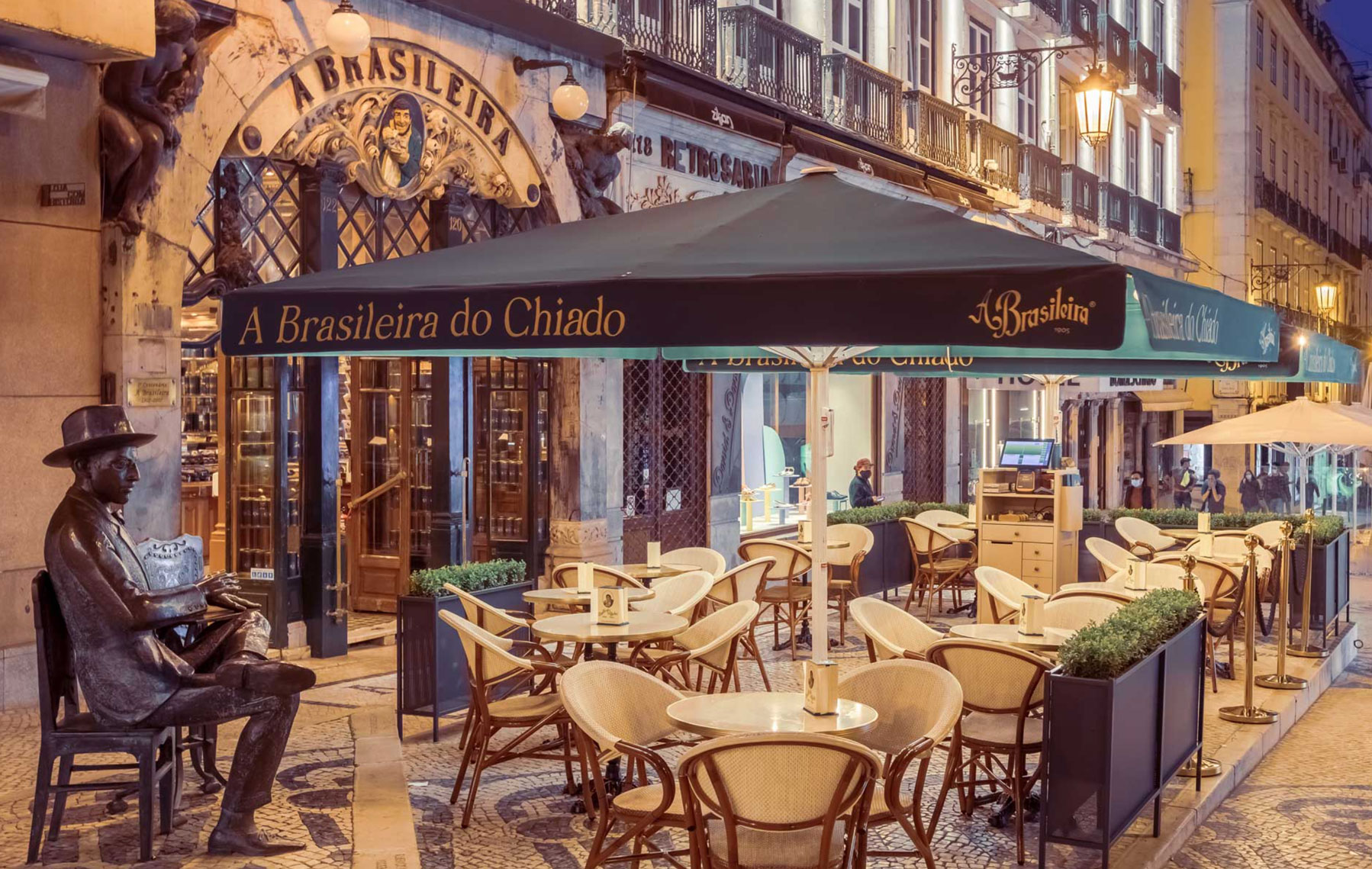
Founded in 1905, next door to the Bertrand bookshop, the café "A Brasileira" was a meeting place for 20th century intellectuals and artists, including the famous Portuguese writer Fernando Pessoa. In 1988, after his death, a bronze statue was unveiled in his honor. Today, "A Brasileira" is one of Lisbon's most notable historic cafés and the life-size statue of Fernando Pessoa is the most touched and photographed in the city. Known for serving excellent coffees from Brazil, the establishment also offers a menu with options inspired by the Portuguese gastronomic tradition. Inside you can admire works by Portuguese painters.
Average price 12€ - 19€
Opening hours
From 8 a.m. to midnight
Founded in 1905, next door to the Bertrand bookshop, the café "A Brasileira" was a meeting place for 20th century intellectuals and artists, including the famous Portuguese writer Fernando Pessoa. In 1988, after his death, a bronze statue was unveiled in his honor. Today, "A Brasileira" is one of Lisbon's most notable historic cafés and the life-size statue of Fernando Pessoa is the most touched and photographed in the city. Known for serving excellent coffees from Brazil, the establishment also offers a menu with options inspired by the Portuguese gastronomic tradition. Inside you can admire works by Portuguese painters.
Average price 12€ - 19€
Opening hours
From 8 a.m. to midnight
Brasileira do Chiado
Brasileira do Chiado
©Brasileira do Chiado
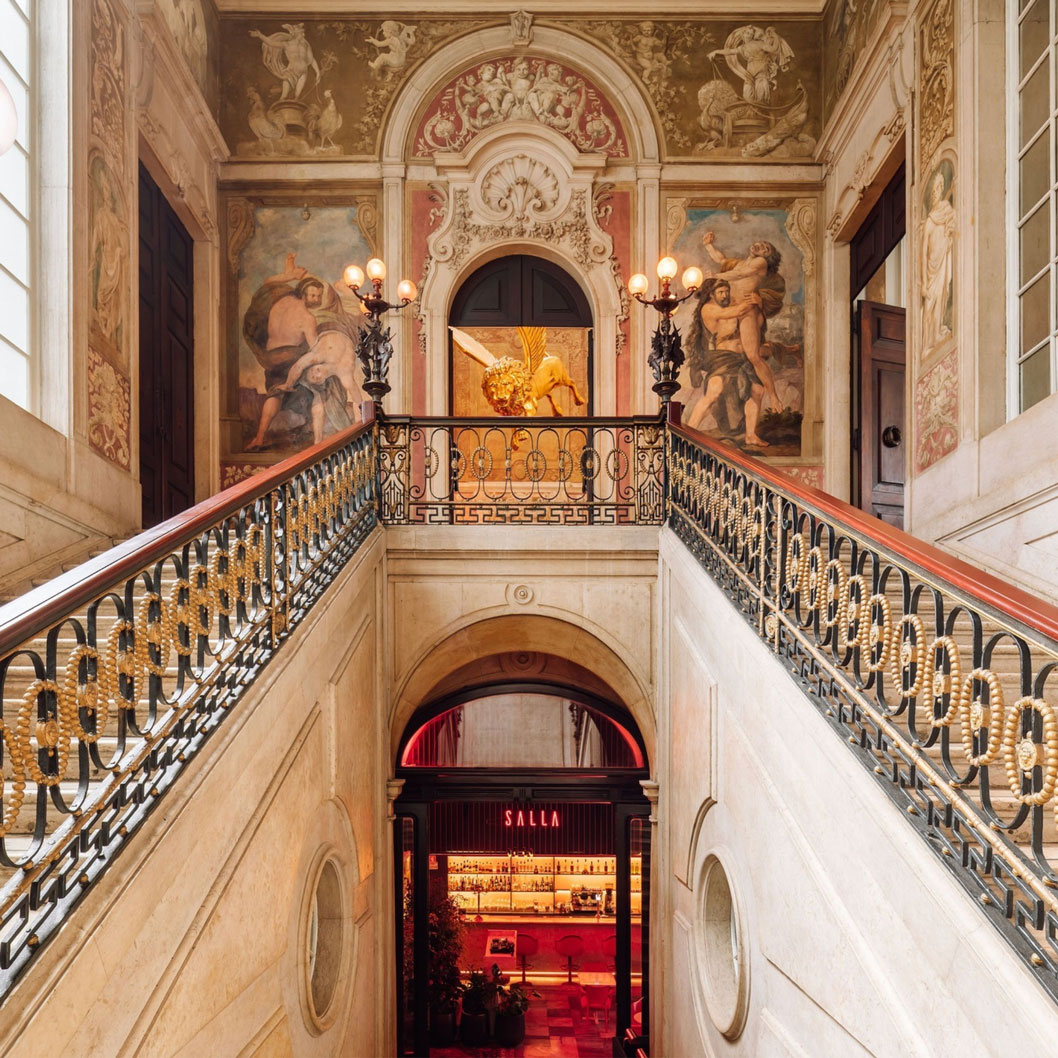
Set in a glamorous 18th century palace, this restaurant combines history, art and signature food. With its chromatic features and mythological allusions, when you enter the palace you are instantly immersed in a great work of art, including the frescoes on the ceiling, the stained glass windows on the staircases, the worked marble and friezes, the artistic stuccos and, of course, the great golden lion hanging from the ceiling. Divided into three rooms - the Arab Room, the Sabine Room and the Ball Room - the Palácio do Chiado takes us on a journey "to the four corners of Portugal and the four corners of the world", presenting flavors that range from the origins of Trás-os-Montes (North of Portugal) to contemporary cuisine. At the entrance, there is also a Lounge Bar, ideal for those who want to have a drink in a trendy and relaxed atmosphere. It serves appetizers, snacks, signature cocktails and Portuguese wines. From Thursday to Saturday, there is a DJ.
Average price 20€ - 50€
Opening hours
Sunday to Wednesday: 12h30 - 00h00
Thursday to Saturday: 12h30 - 2h00
Chiado Palace
Chiado Palace
©Palácio Chiado
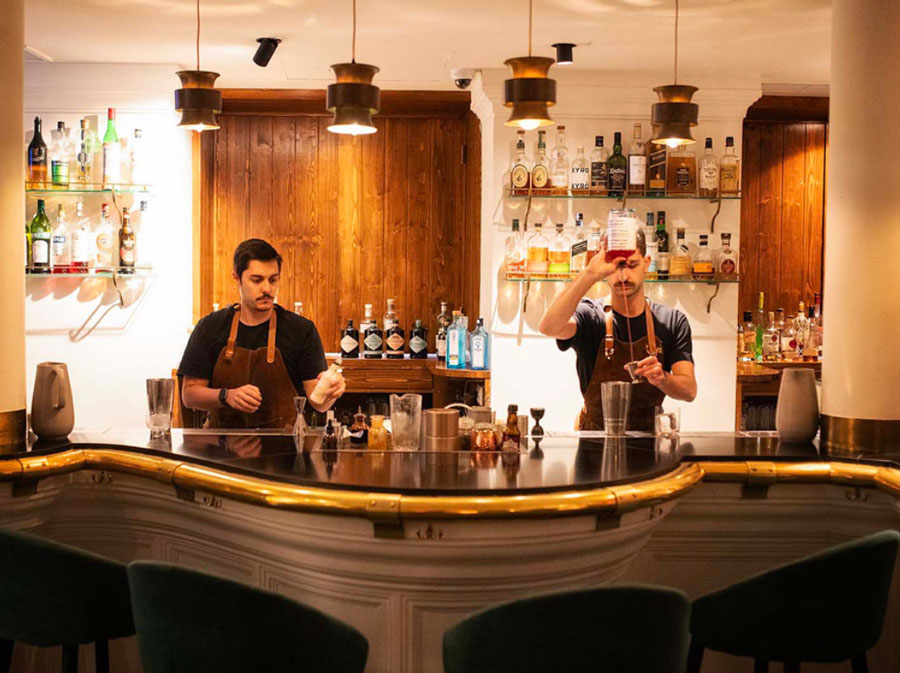
With creations inspired by traditional Portuguese, Yugoslavian, French and Italian cuisine, "Bistro 100 maneiras" invites you to immerse yourself in the travels, life and experiences of chef Ljubomir Stanisic. Located in a historic Art Deco building, this restaurant opened in 2010 and has been a success story. In 2017, it won No. 1 in the world at the Monocle Restaurant Awards. At the entrance is a lively bar with loud music, where signature cocktails from some of the best Portuguese baristas are served. The bar is also award-winning: in 2017 and 2019, it won the Coaster award for Best Restaurant Bar in Portugal. Here "art and gastronomy, music and cocktails, the most conservative and the most eccentric coexist". It's bohemian Chiado!
Average price 60€
Opening hours
Monday, Thursday and Friday: 18h30 - 02h00
Saturday and Sunday: 12h00 - 15h00 / 18h30 - 02h00
(Closed on Tuesdays and Wednesdays)
With creations inspired by traditional Portuguese, Yugoslavian, French and Italian cuisine, "Bistro 100 maneiras" invites you to immerse yourself in the travels, life and experiences of chef Ljubomir Stanisic. Located in a historic Art Deco building, this restaurant opened in 2010 and has been a success story. In 2017, it won No. 1 in the world at the Monocle Restaurant Awards. At the entrance is a lively bar with loud music, where signature cocktails from some of the best Portuguese baristas are served. The bar is also award-winning: in 2017 and 2019, it won the Coaster award for Best Restaurant Bar in Portugal. Here "art and gastronomy, music and cocktails, the most conservative and the most eccentric coexist". It's bohemian Chiado!
Average price 60€
Opening hours
Monday, Thursday and Friday: 18h30 - 02h00
Saturday and Sunday: 12h00 - 15h00 / 18h30 - 02h00
(Closed on Tuesdays and Wednesdays)
Bistro 100 maneiras
Bistro 100 maneiras
©Bistro 100 Maneiras
Buyer testimonials
Buyer testimonials
“We bought a flat through De Brito Properties several months ago and they have always helped us with the work, the contracts, the procedures (quickly and reliably). They have become our point of reference in Portugal and help us with all our questions. We congratulate ourselves every day for having gone through them for our purchase in Lisbon.”
Isabelle Sebah
“We bought a flat several months ago from De Brito and we were always helped with the works, the electricity, the various stages. It really is the ideal agency for a long-term property transaction!”
Florence Crisanto
"Very good experience. Very professional and reliable agency, and even more so because they helped us every step of the way, a great advantage, especially when you don't speak the language. Thanks to the whole team for their availability and friendliness."
Véronica L.
“My husband and I had great help buying a house in Azeitão. Titti Curtaz was attentive, professional, friendly and truly listened to our needs and concerns as we tried to find the right house for us. She was generous and patient. Our Portuguese is very basic and she graciously helped us translate the information between the seller and us. I highly recommend her and De Brito Properties”
Christina S.
"Professional, serious and attentive team. Very good service and good products. Ideal accompaniment!"
Jean Louis D.
"Quality service that listens to the customer. Thank you very much for helping us with our purchase and installation in Lisbon."
Bernardette Fernandes
See our selection of properties in Baixa-Chiado
See our selection of properties for sale in Baixa-Chiado
See our selection of properties in Baixa-Chiado
See our selection of properties in Baixa-Chiado
See our selection of properties for sale in Baixa-Chiado
See our selection of properties in Baixa-Chiado
We are your "Property Finder"
We are your "Property Finder"
Didn't find the property you're looking for on our website? Leave us your criteria and we will search the market and prepare a selection that suits your request.

